This is a rewrite of an imToken article published on November 11, 2026, at 21:36 (UTC+8). The project decisions and plans below are reported as of that date.
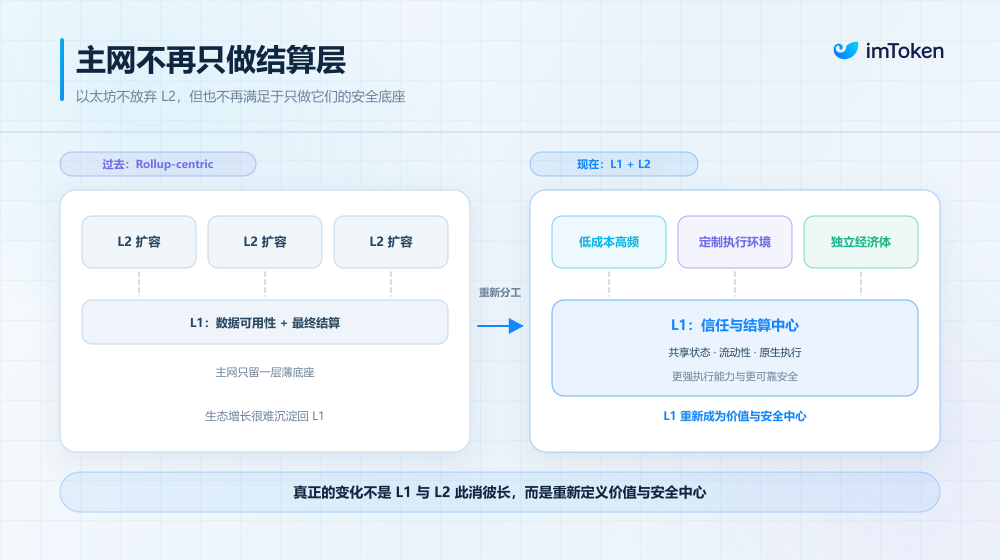
Running an Ethereum layer 2 can lower execution costs, but it also creates another network to operate and another boundary for users and assets to cross. The imToken article describes projects reconsidering that trade-off as Ethereum’s mainnet capacity improves. It does not argue that L2s are disappearing.
Projects reassess the route
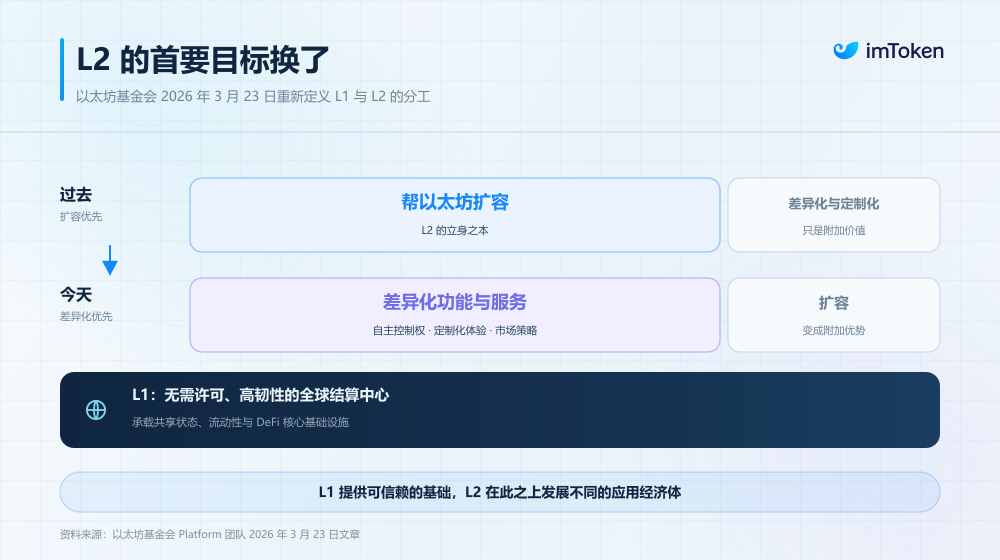
ENS Labs planned a dedicated ZK rollup, Namechain, for ENSv2 in 2024. In February 2026, ENS co-founder Nick Johnson said development would stop and ENSv2 would deploy on Ethereum mainnet instead, citing faster-than-expected L1 scaling. According to ENS Labs figures quoted in the article, the average gas cost of an ENS registration fell by about 99% over the preceding year—from nearly $5 to under $0.05. A separate rollup would also require infrastructure, bridging, cross-chain resolution, audits and ongoing operations.
The article cites other decisions with different motivations. Synthetix launched its new perpetuals exchange on mainnet in December 2025 after criticizing fragmented L2 liquidity and infrastructure reliability. In 2026, Trueo announced a move of its primary deployment from Base to Ethereum L1; ShapeShift moved its rFOX staking program from Arbitrum to mainnet, where it said most FOX was already held; and Superseed stopped its L2 and planned to move core products to mainnet. Nillion began moving node operations previously on its L2 to Ethereum mainnet and planned to phase out that L2.
Operating costs also matter. According to the article, Blast announced on October 2, 2026, that it would cease operations because network costs exceeded L2 revenue and it saw no reliable route to sustainability. Abstract subsequently announced a planned network shutdown for December 15. Those examples are project-specific, not evidence that every L2 faces the same outcome.
Where execution and trust sit
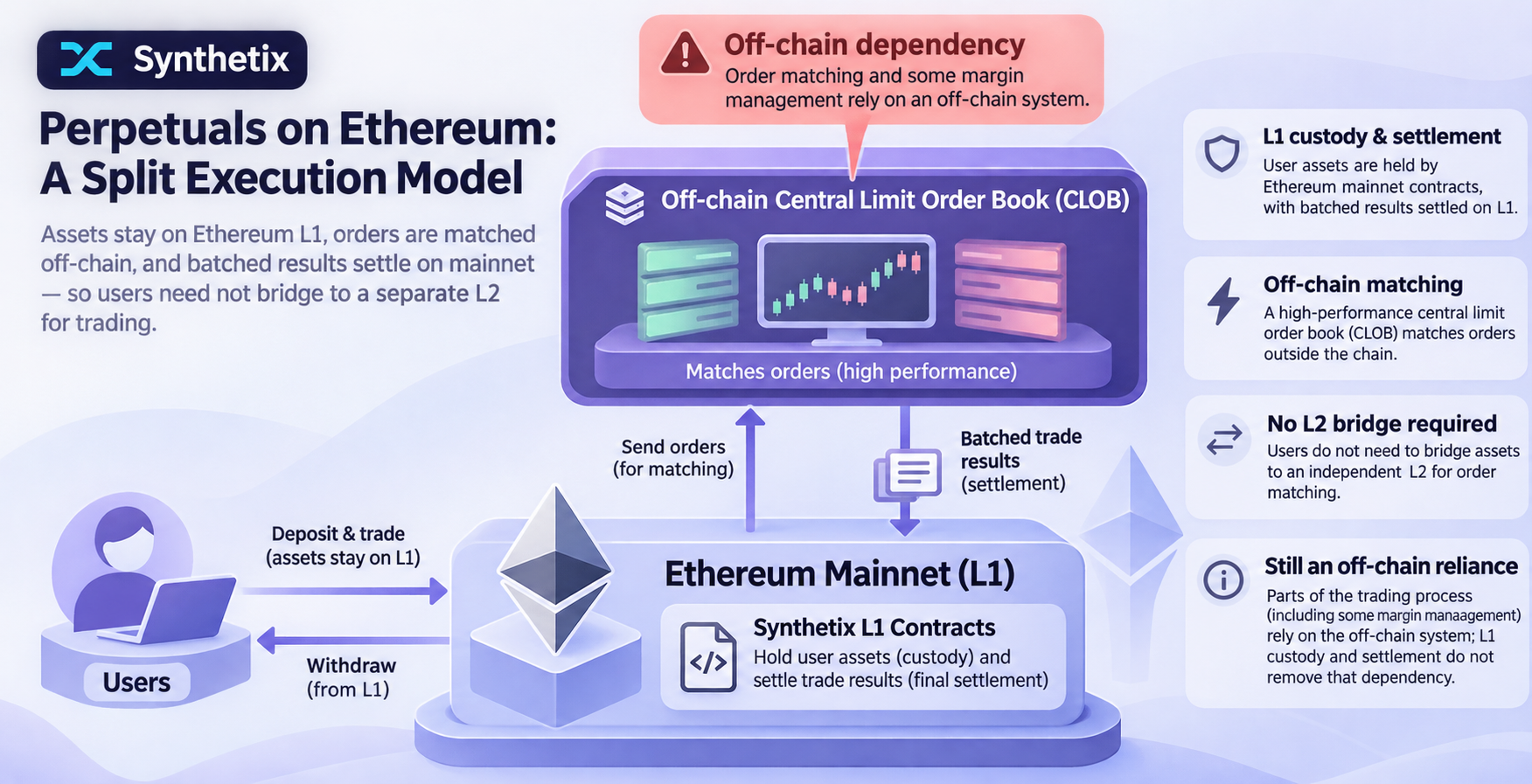
Moving an application to L1 need not mean putting every operation on-chain. The article describes Synthetix’s perpetuals design as a split route: Ethereum L1 contracts hold user assets, an off-chain central limit order book matches orders, and batches of results settle on mainnet. Users therefore need not bridge those assets to an independent L2 for matching. They still depend on the off-chain system for parts of the trading process; the article says some margin management also relies on it. L1 custody and settlement do not remove that dependency.
The same distinction matters when assessing rollups. Citing ETHBEAT data as of November 2026, the article says only a handful of tracked L2s had reached Stage 2, with negligible assets at that stage, while Base, Arbitrum One and OP Mainnet remained at Stage 1. Where key upgrades or state decisions remain under the control of a small number of parties, an L2 should not be treated as having the same trust assumptions as Ethereum mainnet.
Native Rollup research and proposals such as the Ethereum Economic Zone aim to make verification or interaction between execution environments more closely integrated with Ethereum. The article presents these as work at various research and validation stages—not deployed solutions to fragmented liquidity or cross-chain trust.
The question for ETH
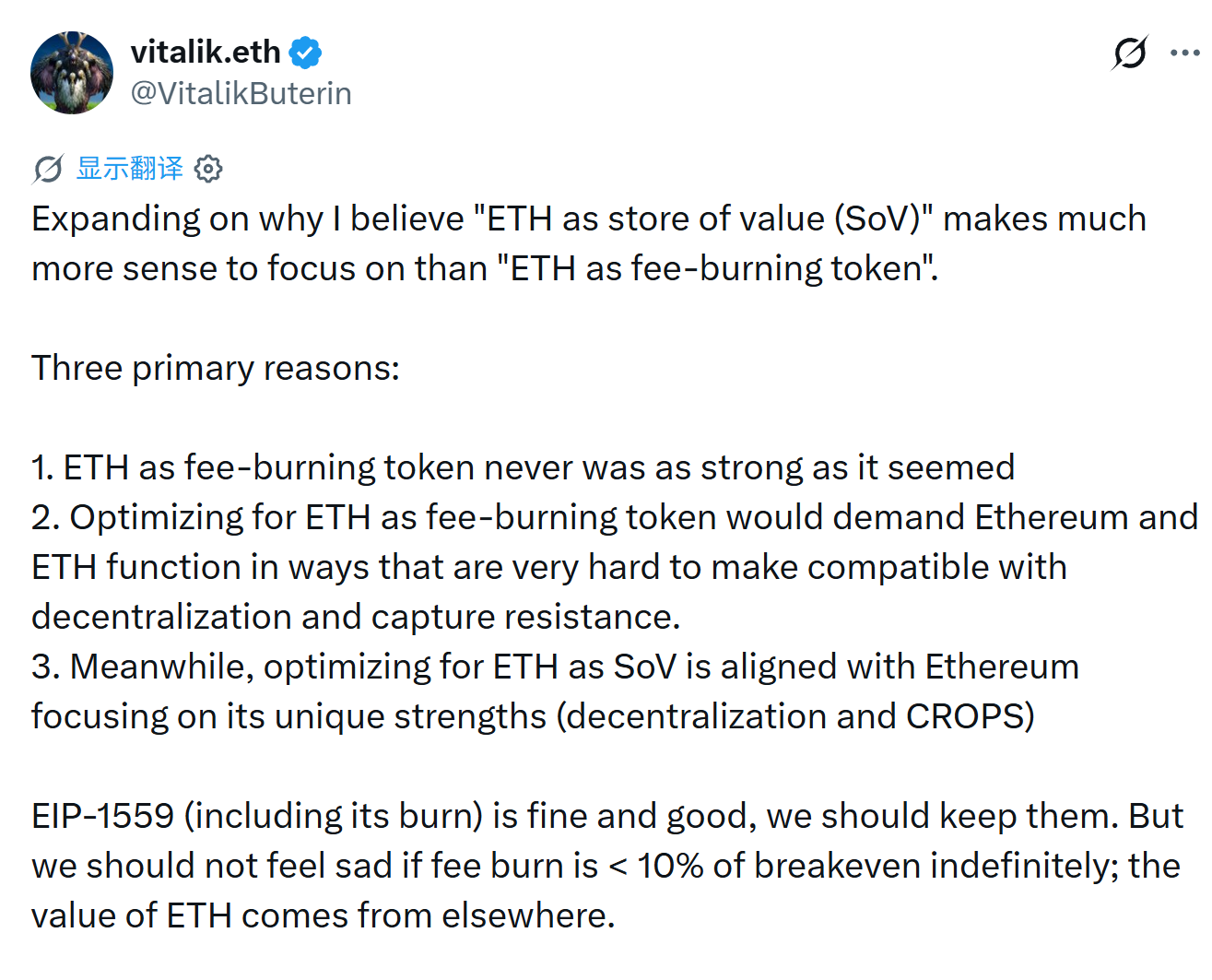
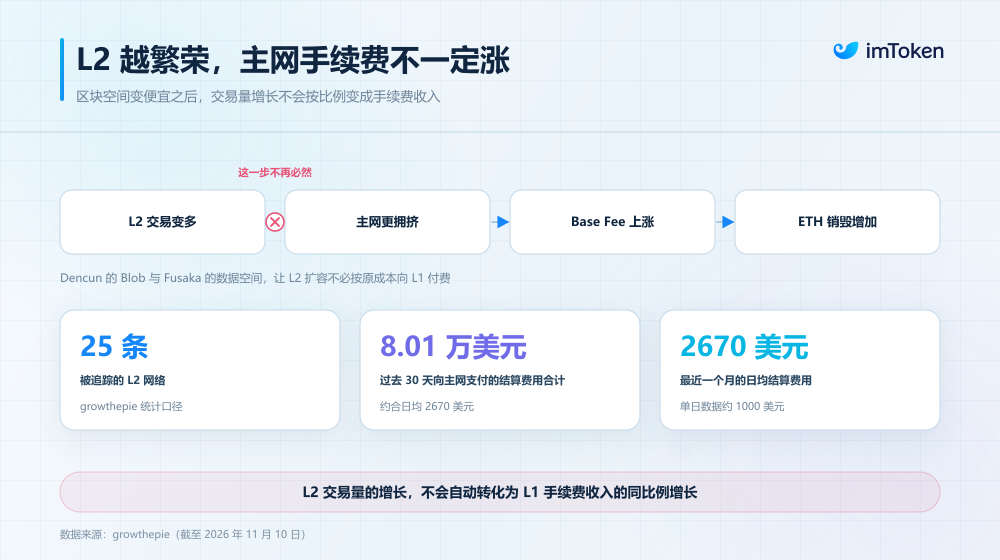
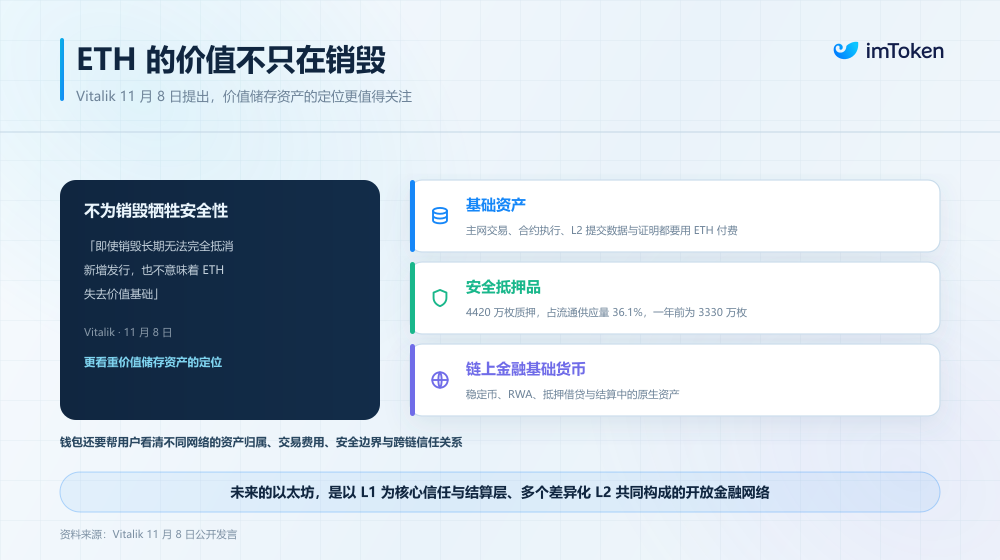
The article also challenges the idea that higher transaction fees are necessary for ETH’s value. Under EIP-1559, base fees are burned and priority fees go to validators. But cheaper L2 data posting and greater L1 capacity could reduce fees per transaction without reducing overall use. Vitalik Buterin, as cited in the article, argues that ETH’s role as a store of value deserves more emphasis than fee burning alone; he does not propose ending the burn mechanism.
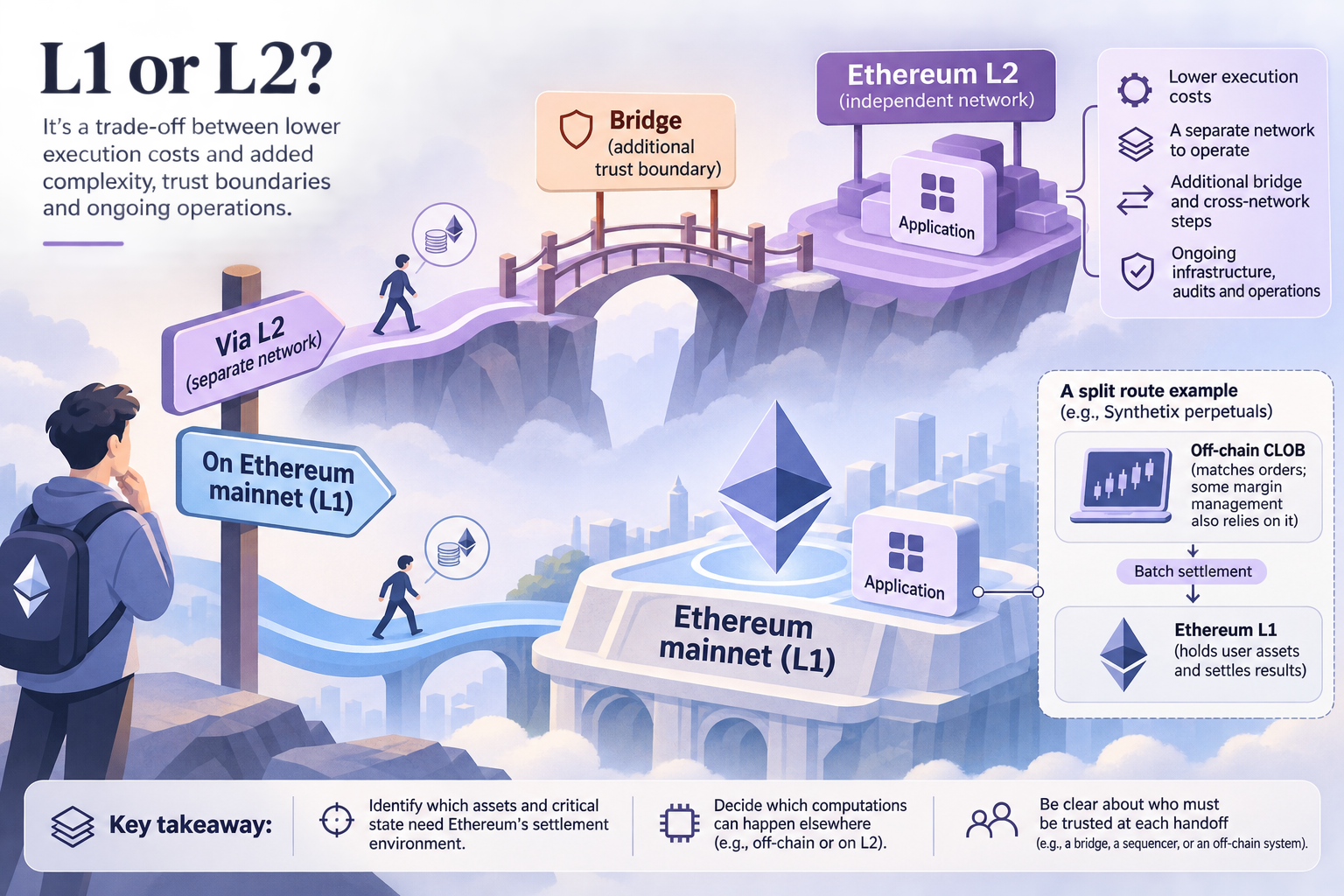
That leaves a more practical infrastructure question than whether L1 or L2 wins: which assets and critical state need Ethereum’s settlement environment, which computations can happen elsewhere, and who must be trusted at each handoff?
Source: panewslab.com (originally published 2026-11-11 21:36 UTC+8)