Originally reported by TechFlow on November 11, 2026, at 14:24 UTC+8. The article translates and presents Uniswap’s interpretation of a purported SEC innovation exemption; its regulatory and market claims are attributed to that account.
Uniswap says an SEC innovation exemption that took effect on September 17, 2026, created a category called tokenized securities venues (TSVs). According to its account, qualifying venues can receive a five-year exemption from registering as securities exchanges or alternative trading systems, while liquidity providers meeting the order’s conditions need not register as dealers. The exemption is described as temporary, conditional and subject to change—not as unrestricted approval for on-chain stock trading.
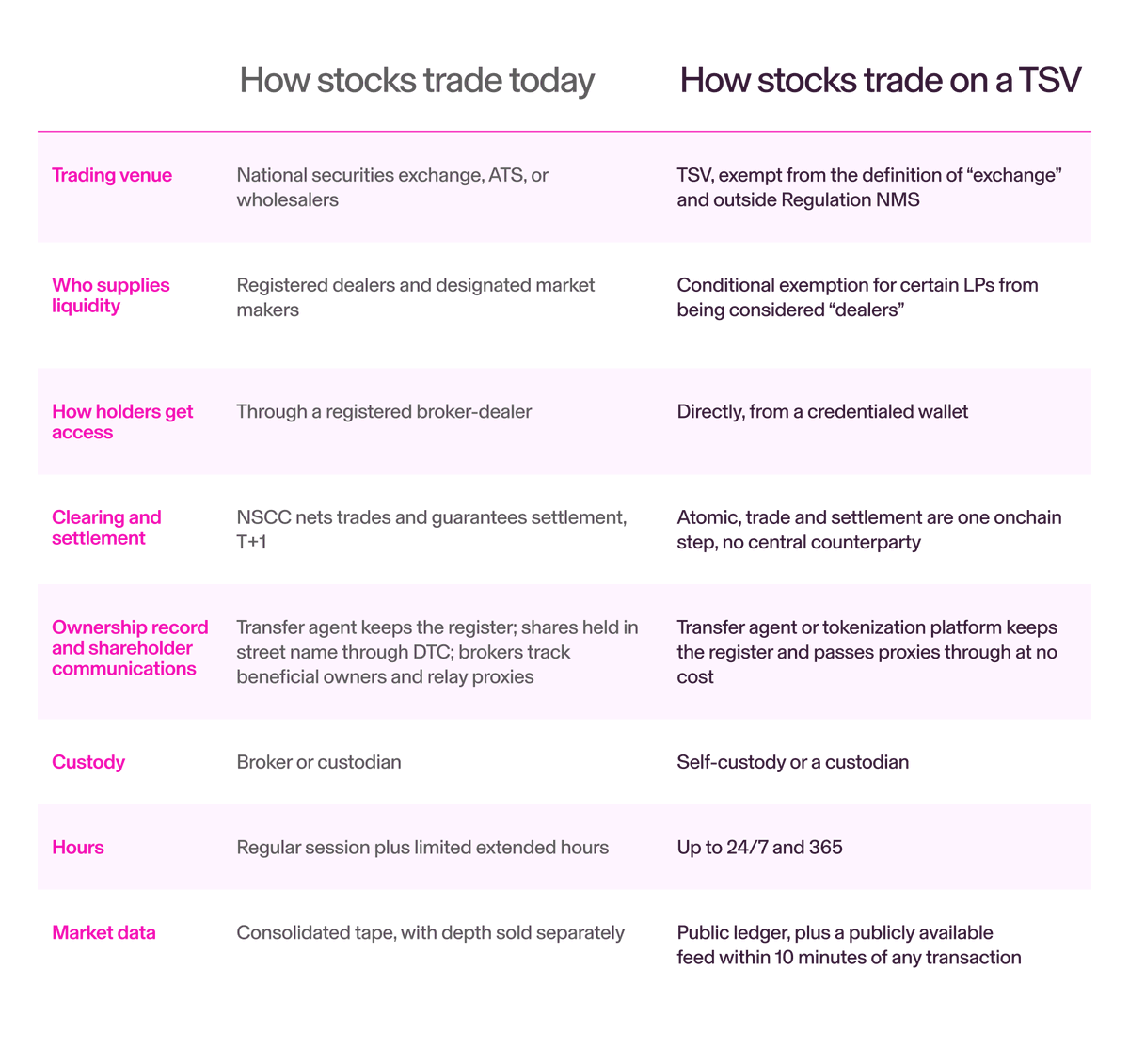
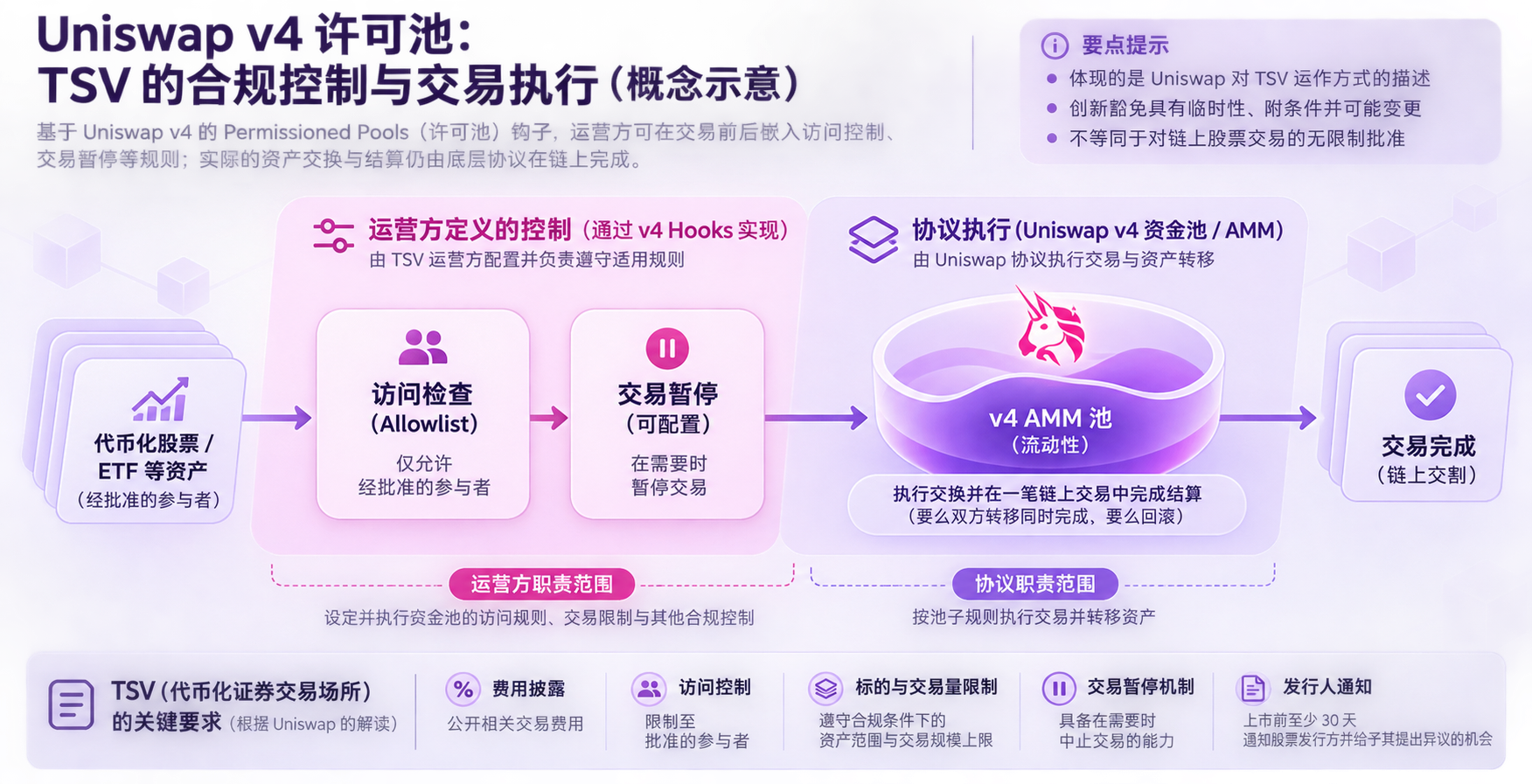
The proposed route is an automated market maker (AMM) pool on a public blockchain, with trading restricted to approved participants. Uniswap says a TSV would have to disclose fees, control access, observe limits on eligible assets and trading volume, and provide a way to halt trading. It also says the venue must notify a stock issuer 30 days before listing its shares and give the issuer an opportunity to object.
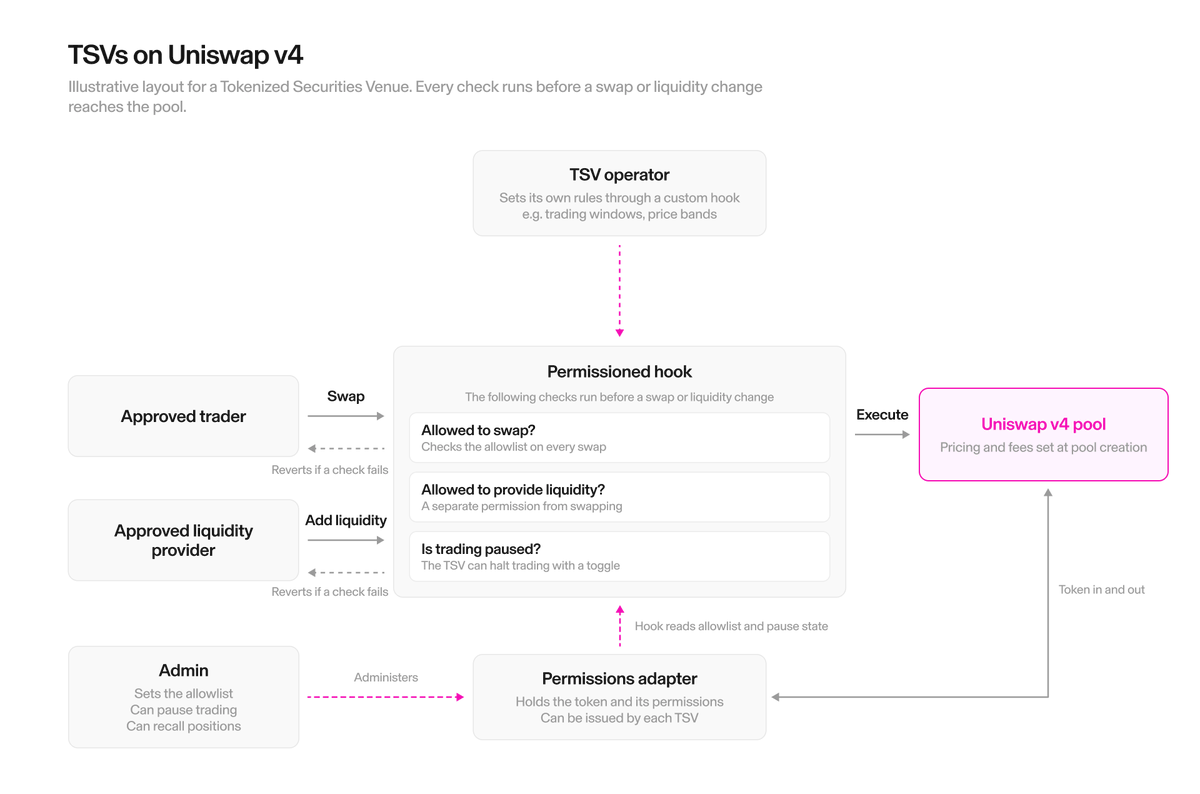
Where the controls sit
Uniswap presents its v4 Permissioned Pools hooks as one way for a venue operator to apply controls such as allowlists and trading pauses. Hooks can run around a swap; the underlying protocol executes the trade and transfers assets. That distinction matters: the venue operator sets the pool’s access rules and remains responsible for its design and legal compliance. Uniswap Labs says it does not operate or control TSVs built on the protocol.
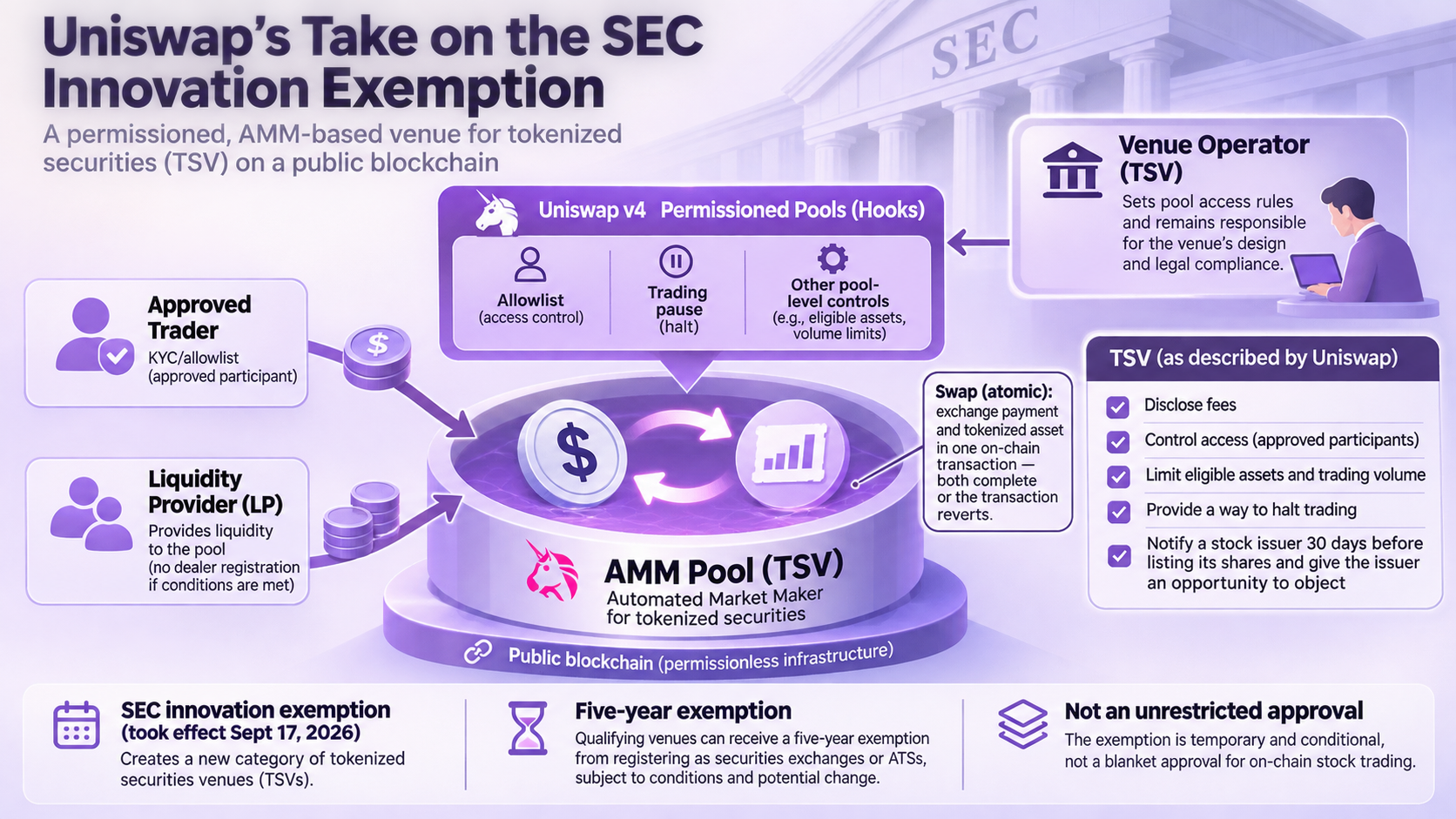
In Uniswap’s description, a TSV swap exchanges payment and assets within one on-chain transaction: both transfers complete or the transaction reverts. Its account does not establish how any particular tokenized stock is issued, backed or linked to shareholder rights. Nor does use of a public blockchain remove the dependency on a venue’s eligibility checks and operating rules.
The market case Uniswap makes
Uniswap says tokenized stocks have generated more than $20 billion in cumulative trading volume on its protocol, chiefly through products including Robinhood Stock Tokens and xStocks and issuers including Ondo and Dinari. It cites the $79 trillion US equity market as the broader opportunity, but describes shareholder rights for on-chain stocks as a possible next step, not an existing feature established for those products.
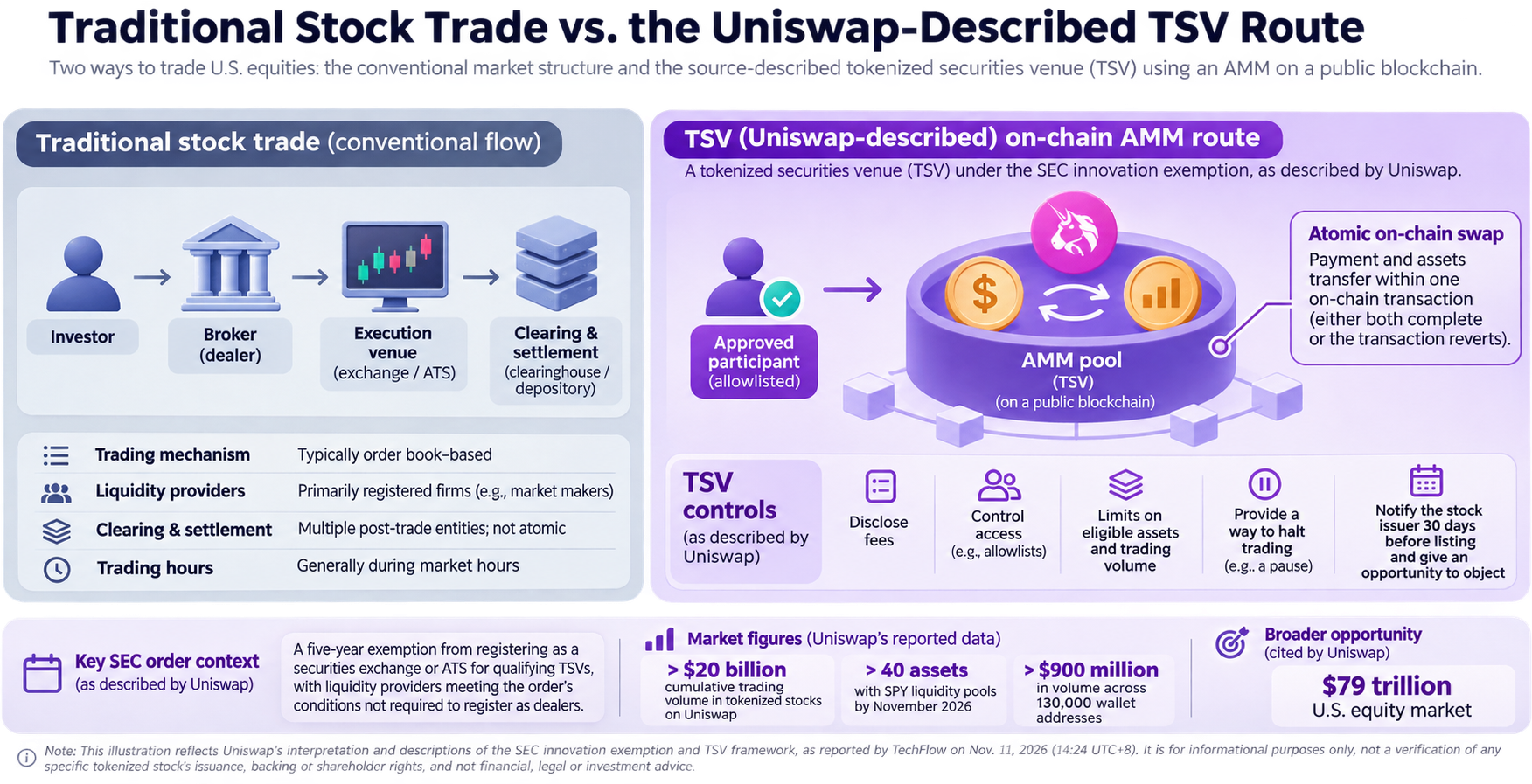
The article also says ten tokenized stocks and ETFs began trading against SPY on Robinhood Chain in August 2026. By the November reporting date, it says more than 40 assets had SPY liquidity pools, generating over $900 million in volume across 130,000 wallet addresses. These are Uniswap’s reported figures, not independent measurements in the supplied article.
Source: techflowpost.com (originally published 2026-11-11 14:24 UTC+8)