Originally reported by 深潮 TechFlow on November 10, 2026, at 20:53 (UTC+8).
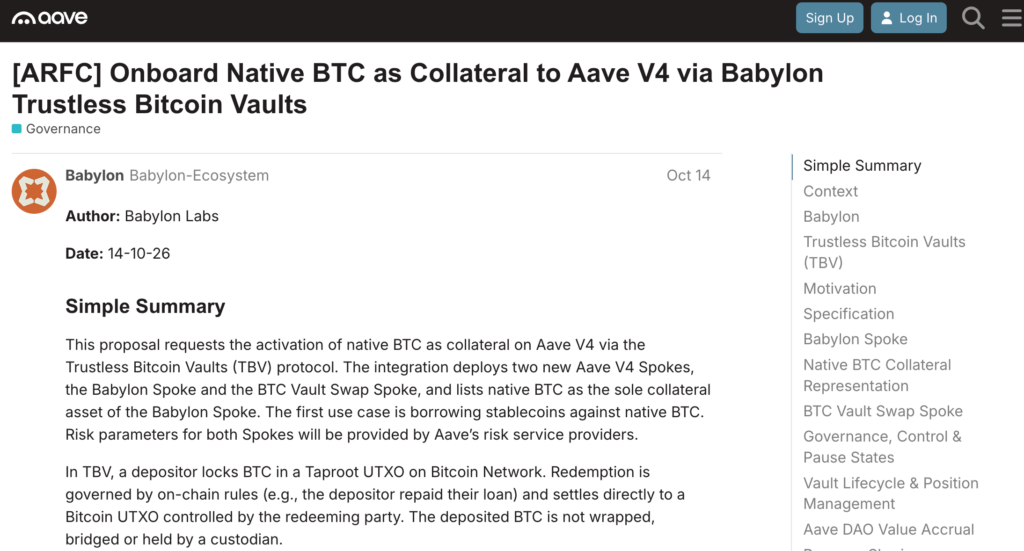
Aave DAO voted unanimously on November 9 to advance an ARFC proposal for using native Bitcoin as collateral in Aave V4 through Babylon’s Bitcoin vaults, according to Babylon. This was not the final approval or a live launch: the proposal still had to pass an Aave Improvement Proposal (AIP) on-chain vote. Its stated target was a mainnet launch by the end of 2026, initially limited in participants and scale.
How the proposed route works
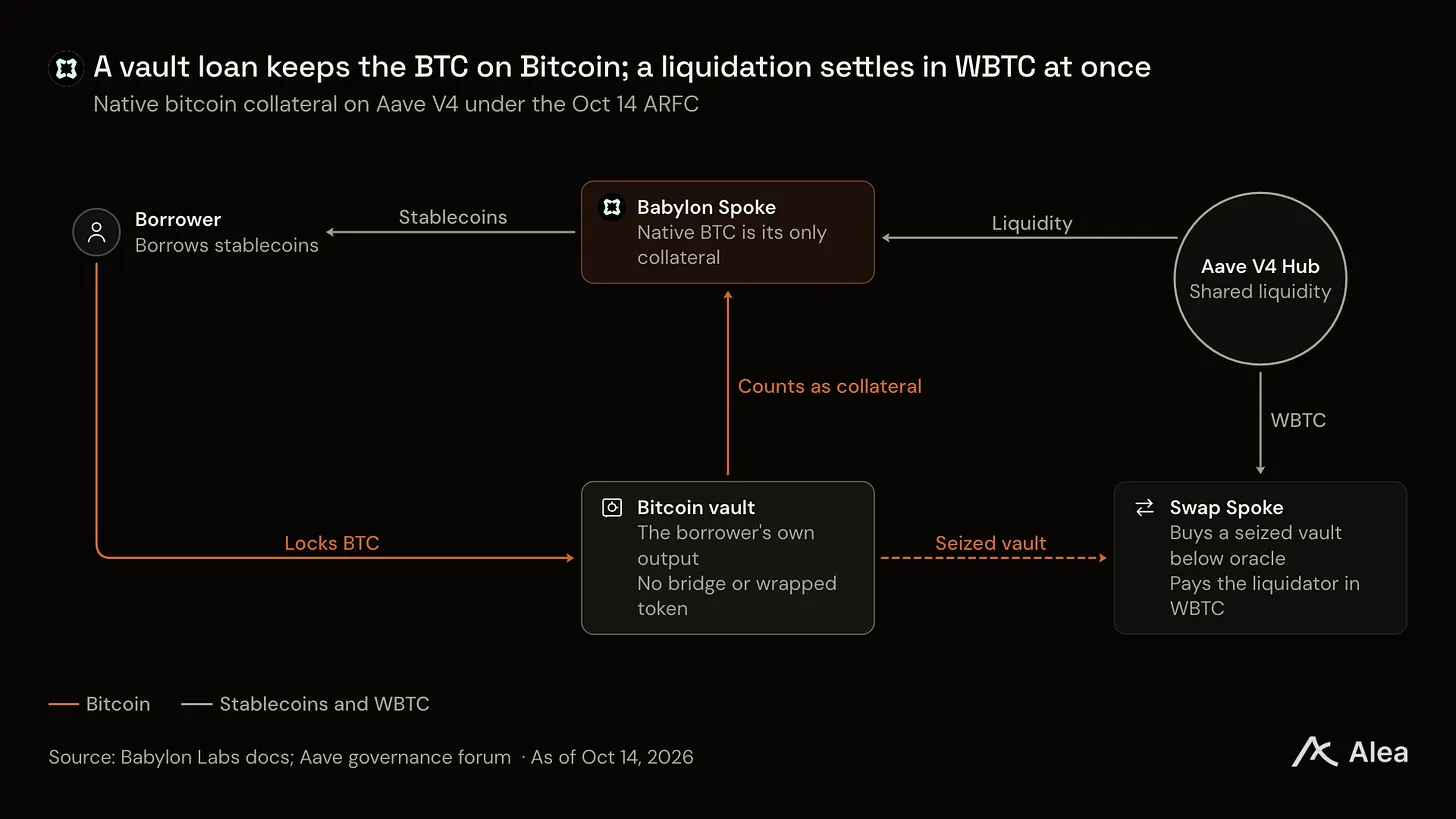
Under the proposal, a borrower would lock BTC in a Taproot vault on the Bitcoin network while retaining control of their private keys. A non-transferable accounting token on Ethereum, matching the locked BTC amount, would serve as the collateral record in Aave V4. The borrower could then borrow assets including USDT and USDC. This is not a plan to move native BTC onto Ethereum or replace it with a transferable wrapped token.
LlamaRisk proposed a 78% collateral factor and a maximum 5.55% liquidation bonus. The proposed initial limits were 300 BTC in collateral and about $21 million in credit: $8 million each for USDT and USDC, $2 million each for USDG and RLUSD, and $1 million for GHO. Any subsequent increases would require Aave DAO approval.
The trust boundary changes at liquidation. The proposal’s settlement module would have liquidators use WBTC to purchase a seized vault, after which arbitrageurs could redeem the BTC on the Bitcoin network. The collateral route avoids placing the borrower’s BTC with a wrapped-token custodian, but liquidation would still depend on WBTC. An emergency-pause authority held by a 3-of-5 multisig involving Aave Labs, LlamaRisk and Babylon could pause and resume the system without a timelock. The proposal says the multisig cannot transfer users’ BTC; a pause would also block repayments and liquidations.
Proposed revenue split
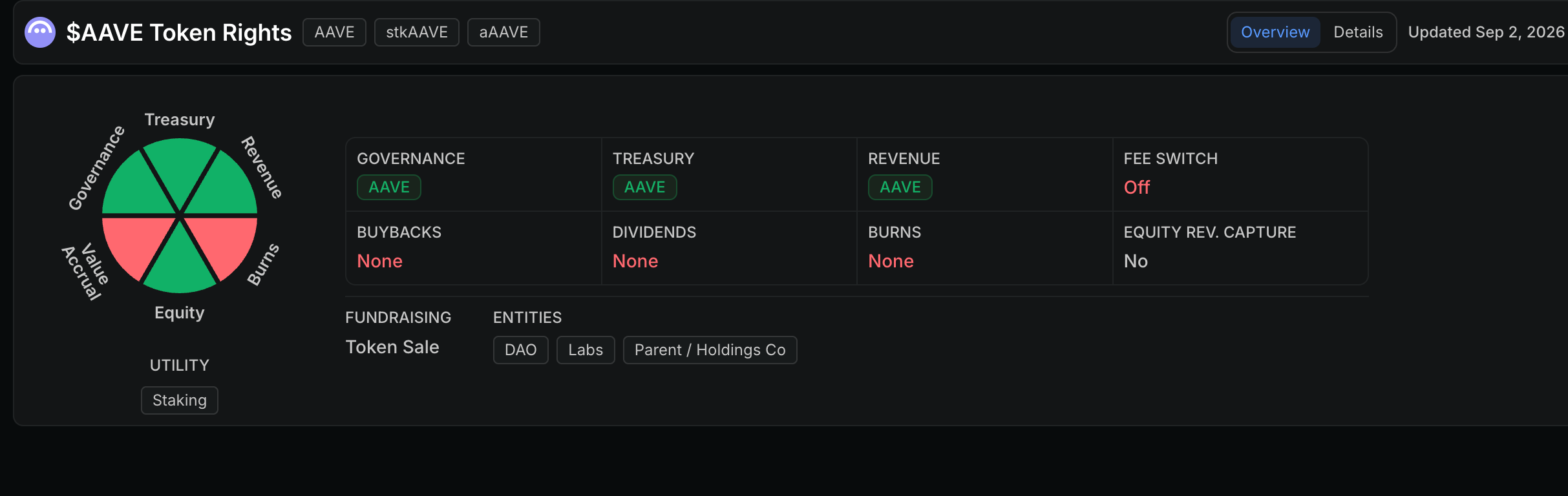
Only two fee sources would count toward the proposed split: Aave’s liquidity fees from interest paid by borrowers on this route, and liquidation fees. Aave DAO would receive the first $500,000 annually. For revenue from $500,000 to $2 million, the proposed shares are 78% for Aave DAO, 18% for Babylon and 4% for token buybacks. The tiers rise to a 7% buyback allocation on revenue above $6 million, with 61.5% going to Aave DAO and 31.5% to Babylon. Buyback spending would be split 85% to AAVE and 15% to BABY; the purchased tokens would be divided between Aave DAO and the Babylon Foundation.
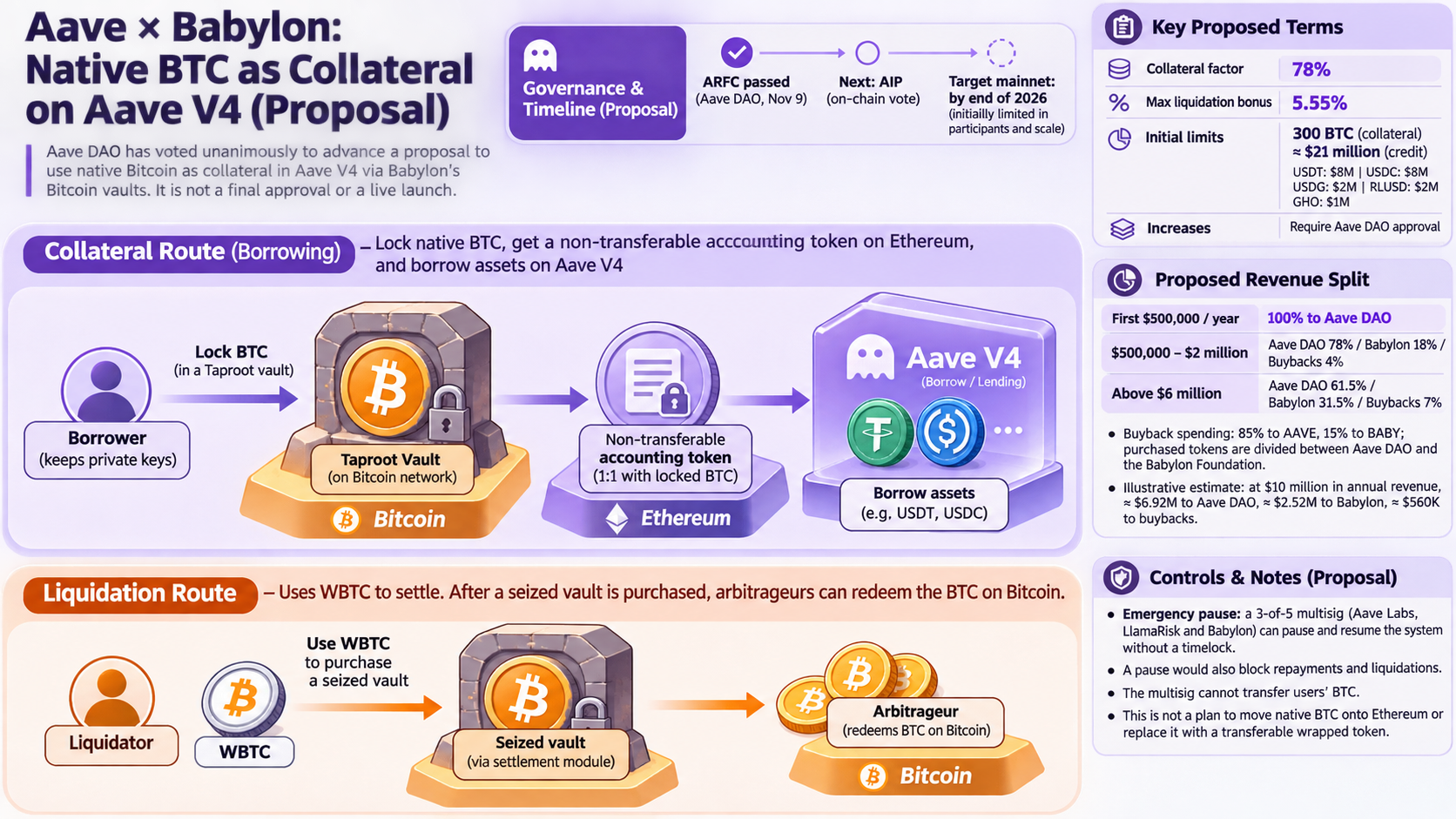
These are proposal terms, not realized revenue. Alea Research estimated that at $10 million in annual revenue, the arrangement would allocate roughly $6.92 million to Aave DAO, $2.52 million to Babylon and $560,000 to buybacks.
Source: techflowpost.com (originally published 2026-11-10 20:53 UTC+8)