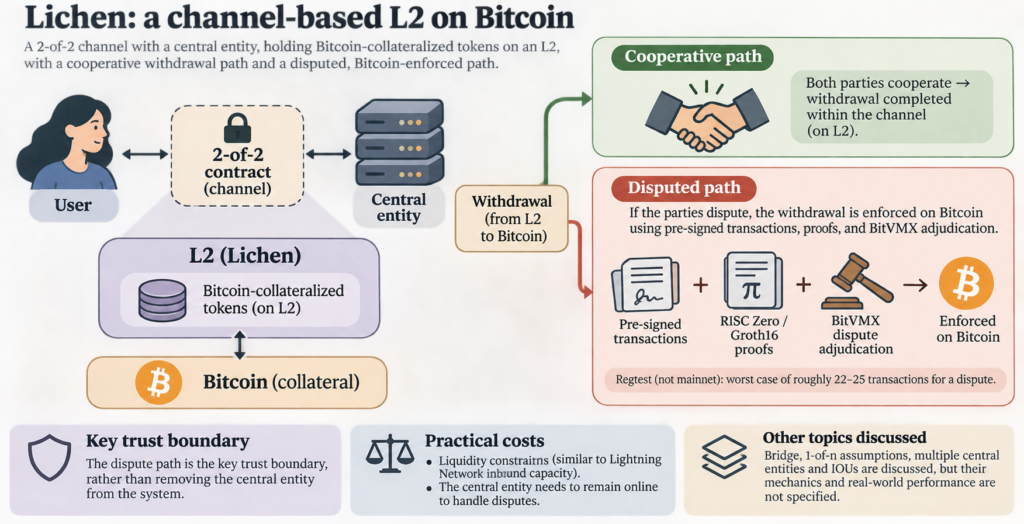
In an article published on November 11, 2026, the author describes Lichen as a channel-based L2 design in which a user enters a 2-of-2 contract with a central entity and holds Bitcoin-collateralized tokens on the L2. The central entity is part of the normal withdrawal path, but the design aims to let users withdraw without trusting it to cooperate.
The described route has two outcomes. When both parties cooperate, a withdrawal is completed within the channel. If they dispute it, the withdrawal is enforced on Bitcoin using pre-signed transactions, RISC Zero/Groth16 proofs and BitVMX dispute adjudication. The article reports a regtest worst case of roughly 22–25 transactions for a dispute; that is not a measured mainnet cost.
This makes the dispute path the key trust boundary, rather than removing the central entity from the system. The author also identifies two practical costs: liquidity constraints resembling Lightning Network inbound capacity, and the need for the central entity to remain online to handle disputes. The article discusses 1-of-n assumptions, multiple central entities and IOUs, but the supplied account does not specify their mechanics or establish how they would perform in deployment.