As reported on November 9, 2026, Elysium was due to launch its mainnet that evening. The Hyperliquid-linked L2 project had attracted funds and token-launch activity before launch, but reported activity had fallen from its recent peak. A separate dispute over transaction submission raised questions about who could reach its sequencer fastest.
Funds arrived before the planned launch
Elysium Explorer showed more than 210,000 HYPE, worth about $15.48 million, in cumulative bridge inflows at the time of reporting. The source separately cited roughly 98,000 HYPE transferred in and 7,900 HYPE transferred out across chains. It did not explain how those transfer figures relate to the larger cumulative-inflow figure.
Elyscan recorded more than 6.379 million cumulative testnet transactions. Daily transactions exceeded 1.4 million on November 8, before the source reported about 268,000 transactions for November 9—a drop of roughly 80.9% from that peak. The source called the November 9 figure mainnet transactions despite describing the formal mainnet launch as still ahead; it did not resolve that timing discrepancy.
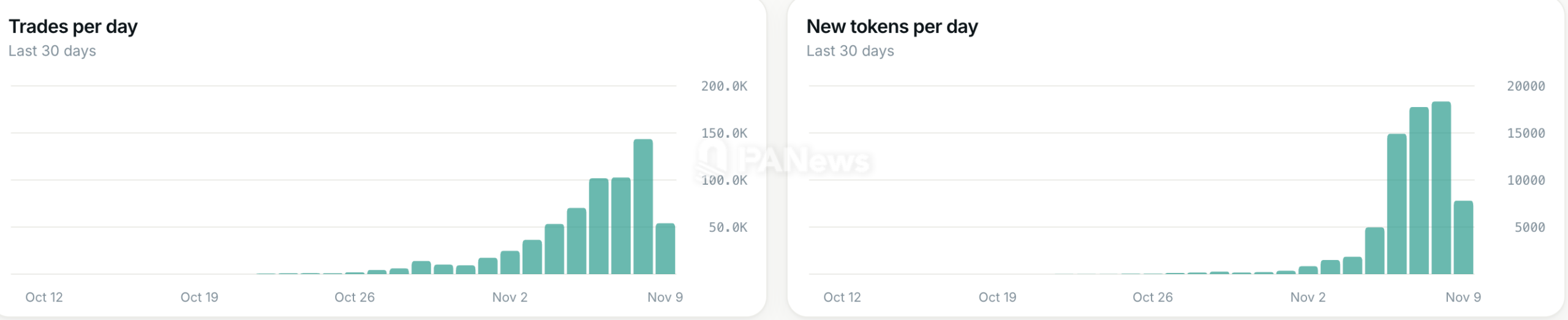
Token launches followed a similar pattern. Arkhampad recorded about 143,000 token trades and 18,000 new tokens on November 8. By November 9, the reported figures were about 25,000 trades and 4,500 new tokens. Elyscreener put launchpad trading volume over the preceding 24 hours at about $21.19 million, with Ascend accounting for roughly 41% and Montra 28%. GMGN showed only six ecosystem tokens with market capitalizations of at least $1 million.
The disputed route to the sequencer
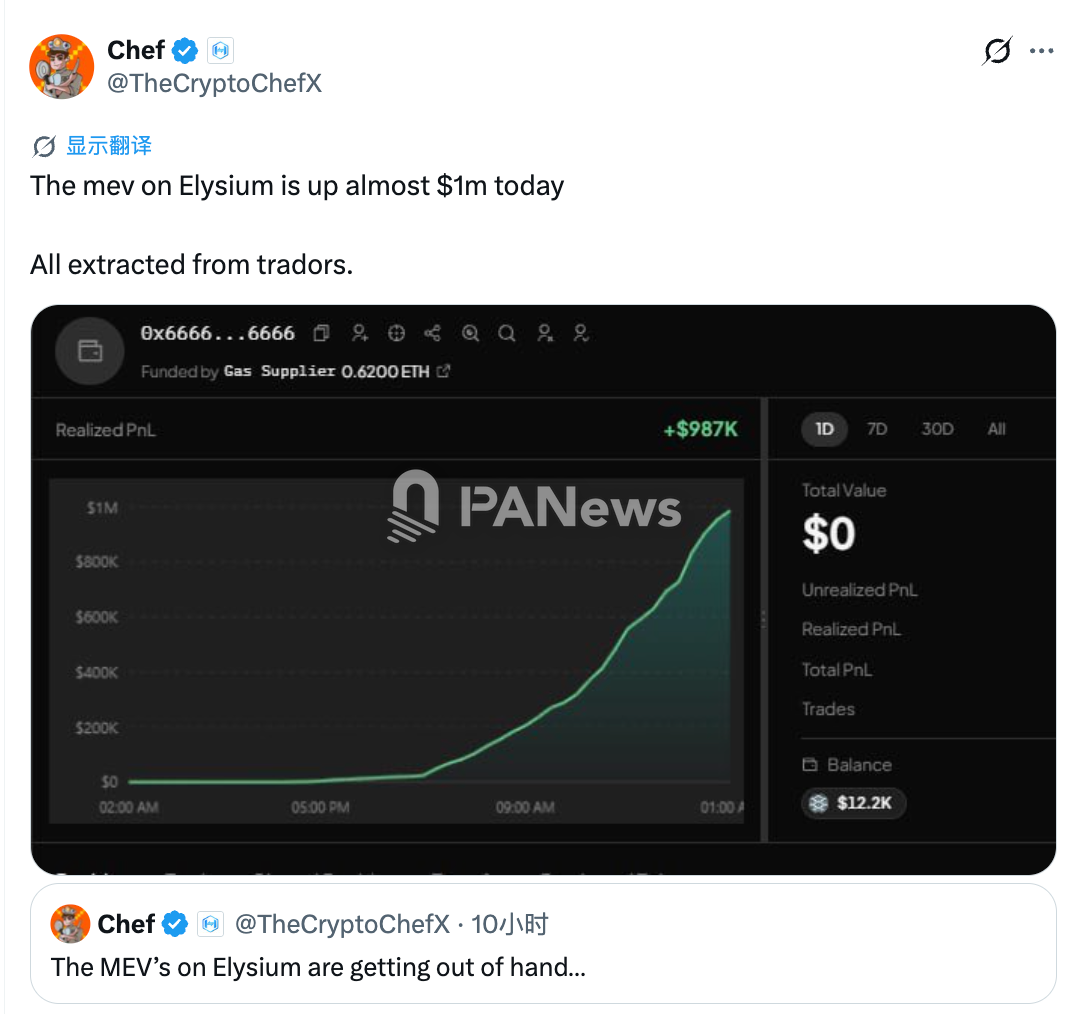
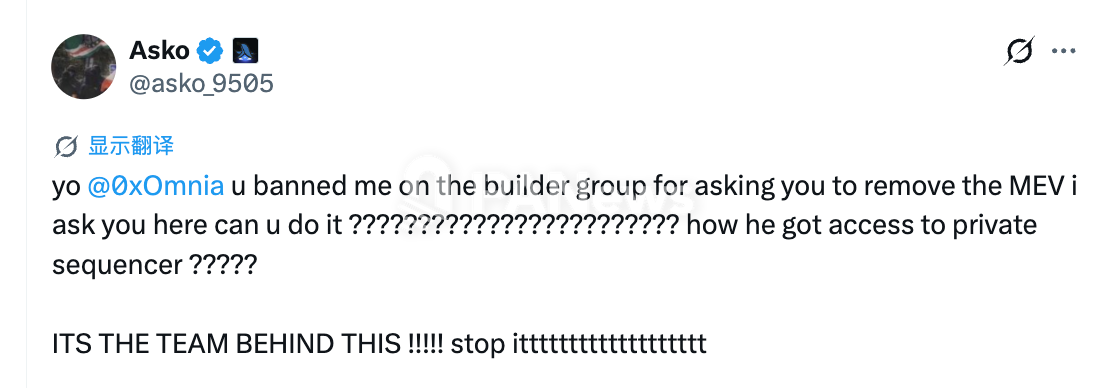
Community members alleged that a wallet used privileged access and a private node to run an MEV bot against launchpad traders. According to the report, Elysium’s team initially said it had revoked the address’s RPC access. After further allegations of activity, the team said the transactions used the normal HyperEVM Delayed Inbox route and denied misuse of sequencer privileges. The allegations and the team’s responses do not establish that privileged access was used for the later trades.

Crypto commentator @y_cryptoanalyst alleged that authorized partner addresses could submit directly to the sequencer with lower latency, while ordinary users had to use the Delayed Inbox. That account of Elysium’s submission paths was disputed rather than independently verified in the report. The trust question is whether the stated priority-fee ordering rules applied equally to transactions arriving through each route.
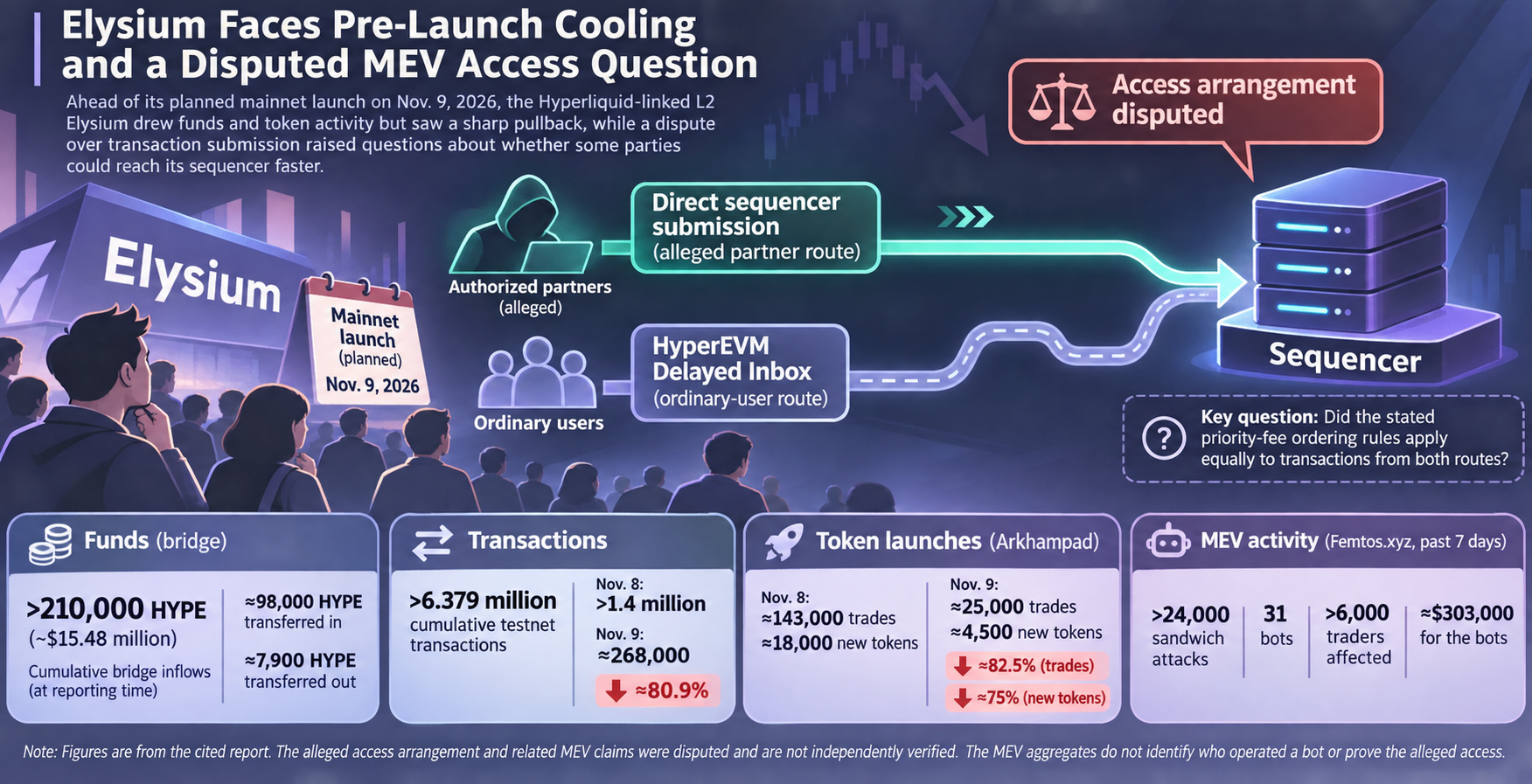
Femtos.xyz reported that, over the preceding seven days, it tracked more than 24,000 sandwich attacks by 31 bots on the testnet, affecting more than 6,000 traders and generating about $303,000 for the bots. Those aggregate figures do not, on their own, identify who operated a bot or prove the alleged access arrangement.