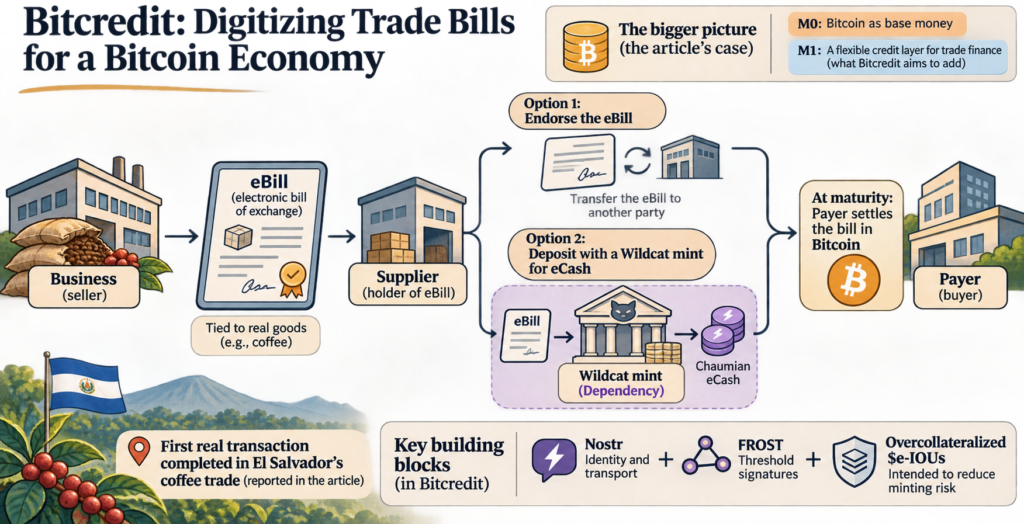
In an article published on November 15, 2026, the author presents Bitcredit as a way to digitize the commercial bill of exchange for Bitcoin-based trade. The argument is that Bitcoin can serve as base money, or M0, but lacks the flexible M1 credit layer the author considers necessary for trade finance. That is the article’s case for the protocol, not an established change to Bitcoin’s monetary system.
Under the described arrangement, businesses issue electronic bills of exchange (eBills) tied to real goods. A supplier can endorse an eBill to another party or deposit it with a Wildcat mint in exchange for Chaumian eCash. The payer settles the bill in Bitcoin when it matures. Bitcredit also combines Nostr for identity and transport with FROST threshold signatures and overcollateralized $e-IOUs, which the author says are intended to reduce minting risk. The mint is therefore a dependency in the route from a trade bill to spendable eCash; the article does not establish that this risk is eliminated.
The author reports that a first real transaction had been completed in El Salvador’s coffee trade by the time of publication. The supplied account provides no further transaction details.