BNB Chain is developing a separate EVM-compatible layer 1 for applications where a delay in updating a quote, processing a liquidation or acknowledging a payment matters. As of November 26, 2026, the chain was running on a developer network, with a mainnet launch tentatively planned for 2027. Its performance figures are design targets, not demonstrated mainnet results.
Why a separate chain?
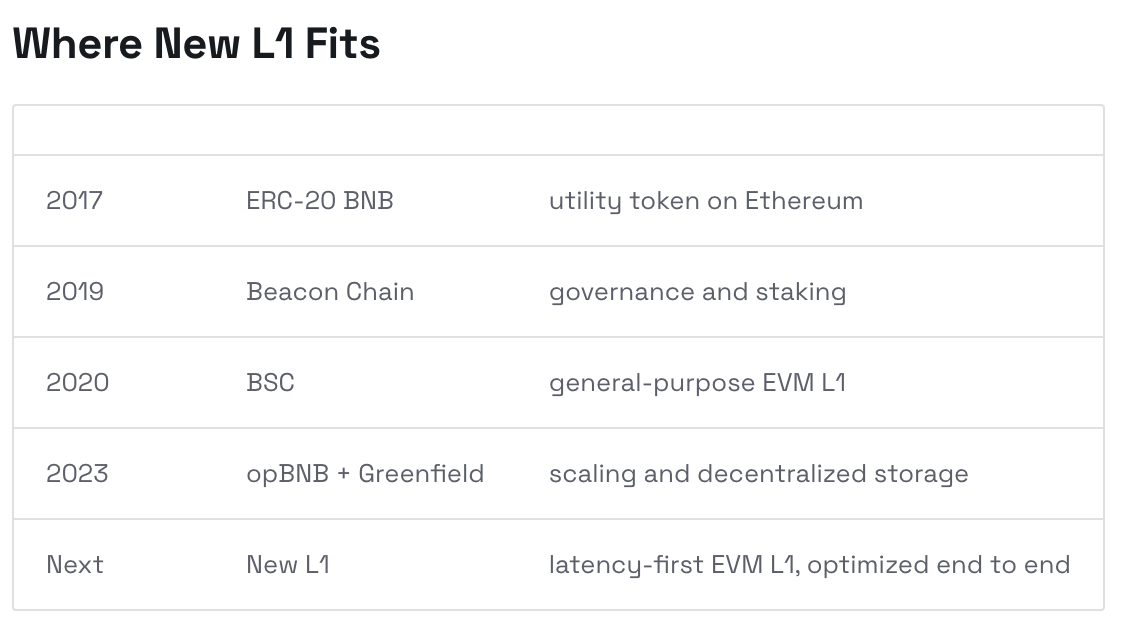
According to the BNB Chain forum, these workloads require architectural changes that BNB Smart Chain (BSC) cannot accommodate through upgrades. The new layer 1 is intended to complement BSC, not replace it in the near term. BSC would continue to host existing DeFi applications, token issuance and everyday contracts. opBNB would handle cost-sensitive activity that prioritizes throughput over subsecond preconfirmation, while Greenfield would continue to provide data storage.
CZ summarized the strategy as “Multiple chains, one coin.” The plan introduces no new token: BNB would retain its roles in network fees, staking and governance. That describes the currency used across the ecosystem, not a mechanism for moving assets between chains. The design as reported does not specify how a transfer from BSC would be verified on the new network.
What a trader or payment app would see
Rather than entering a global pool of pending transactions, a transaction would go directly to the current block producer and the next one. The design aims to shorten the wait for an initial response and make front-running more difficult. It targets about 100,000 transactions per second, with blocks every 200 milliseconds and sub-blocks sent roughly every 20 milliseconds. A preconfirmation is revocable: a payment app could receive an early acknowledgment, but that acknowledgment would not constitute final settlement.
The proposed Multi-Lane design addresses a different source of delay: competition for block space. It would reserve capacity for eligible transaction classes so that, during a surge in memecoin trading, quote updates, liquidations and payments would not all have to compete for the same space. Unused capacity would return to the general lane. BNB Chain CTO David Z previously described the goal as giving traders feedback closer to what they experience on a centralized exchange while allowing them to retain custody of their assets onchain.
Who pays, who can act and who can see a transfer
Native account abstraction would let a user authorize a payment with a passkey and let an application or sponsor pay the fee. The sender would not need to hold BNB, but the sponsor would still settle the network fee in BNB. The design also supports batched operations.
For automated trading or payments, an account owner could delegate limited, revocable authority to an AI agent. The agent could place orders or transfer funds within those limits without receiving the owner’s private keys.
For institutions, the proposal includes an optional privacy pool for BNB and standard BEP-20 tokens. The pool could conceal the sender, recipient and amount while granting viewing access within a defined scope. Some public calls, fees and settlement results would remain visible. That selective disclosure, like the proposed capacity reservations, gives applications a specific reason to consider the new network. Whether it justifies the cost of migrating from BSC or operating on both chains remains an open question.