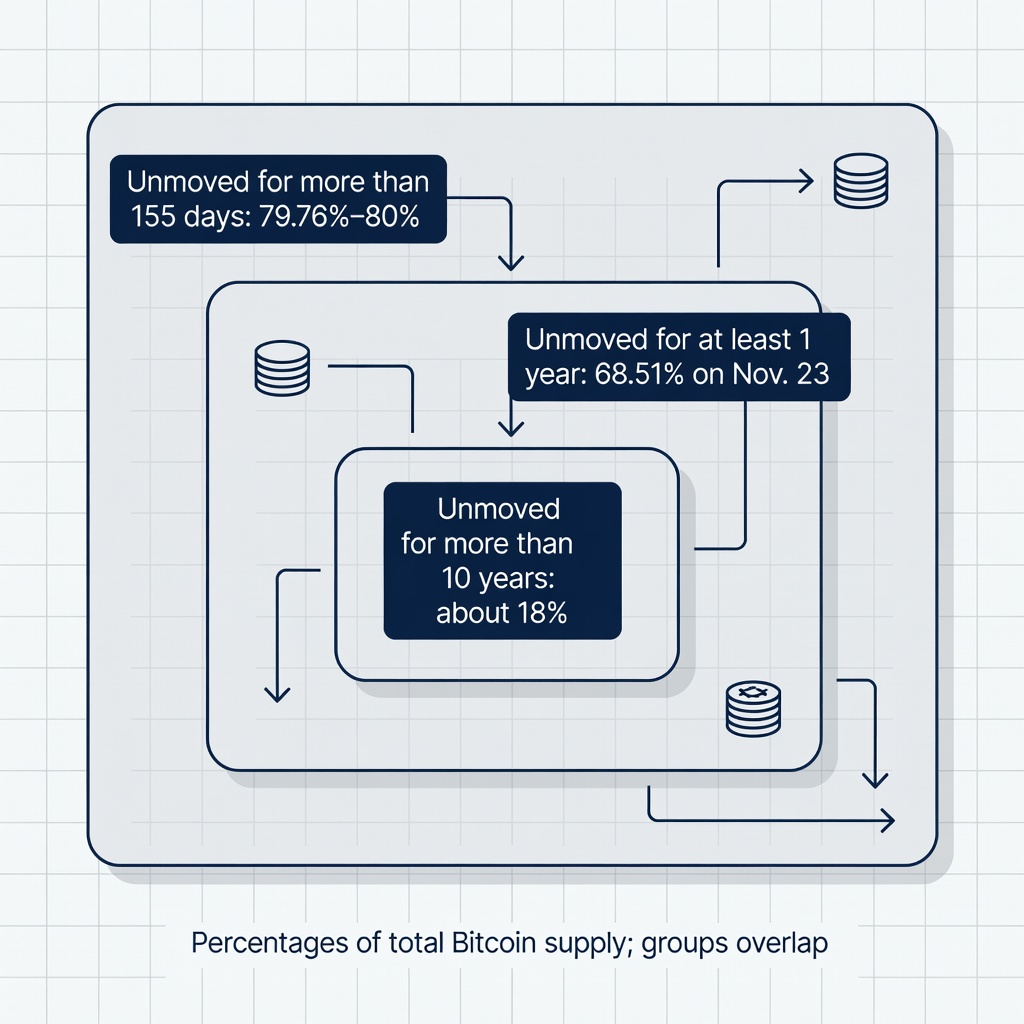
The share of Bitcoin supply that had not moved on-chain for at least a year reached 68.51% on November 23, 2026, according to CoinGlass. That was up from roughly 62% in July, a gain of more than six percentage points in about four months.
Many of the coins that crossed the one-year threshold during that period last moved in the second half of 2025, when Bitcoin traded near its highs. Bitcoin peaked at $126,198 on October 6, 2025. By late November 2026, it was trading around $60,000.
How the holding periods overlap
Using the shorter threshold of more than 155 days without an on-chain move, long-term holder supply stood at a reported 79.76% to 80% in late November. At the other end of the range, a record 3.6 million BTC, or roughly 18% of supply, had gone more than a decade without moving. Those decade-old coins also count toward both the one-year and 155-day figures.
About 630 BTC per day were crossing the 10-year threshold, compared with about 450 BTC in new coins issued to miners each day, a ratio of roughly 1.4 to 1. The two figures measure different things: issuance adds new bitcoin to supply, while an existing coin enters the 10-year group simply by remaining unmoved. Some of those older coins are likely inaccessible because their owners lost the keys, so their inactivity does not necessarily reflect a decision to hold.
What dormancy can tell us about a market low
A rising dormant share leaves a smaller share of supply in recent on-chain circulation. During a price decline, that pattern can be consistent with short-term selling losing momentum while longer-term holders stay put. Similar increases have accompanied past market bottoms, but they have not reliably identified when a low will occur.