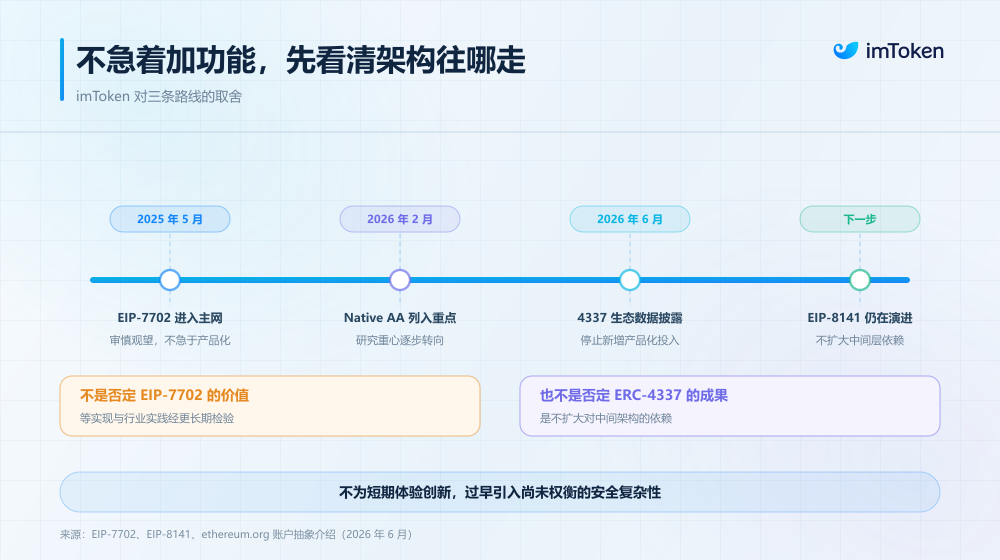
In an article published on November 20, 2026, imToken set out a cautious approach to Ethereum account abstraction: it was not ready to bring EIP-7702 broadly into its wallet, had stopped new product investment in ERC-4337, and was shifting its research focus toward native account abstraction. That is imToken’s product decision, not a change to Ethereum’s rules.
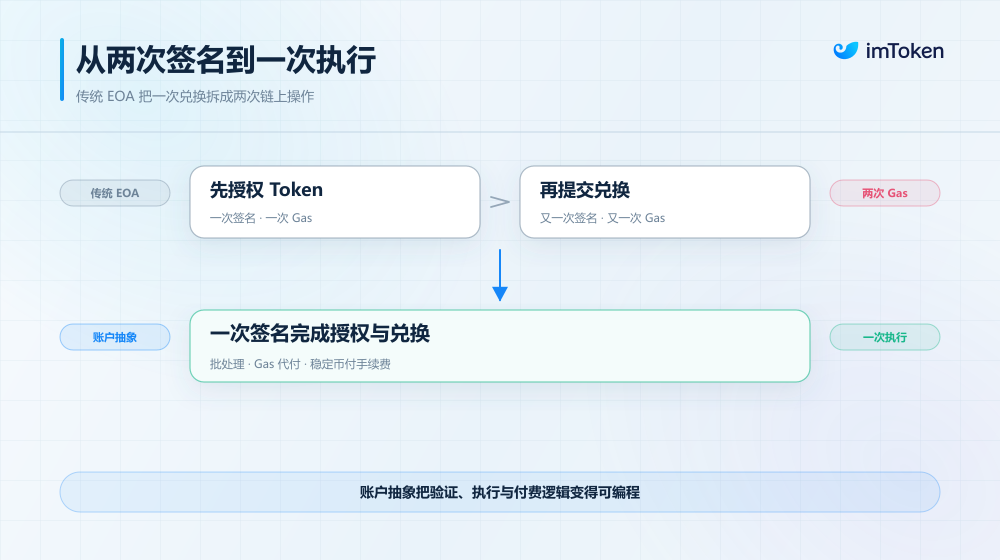
Account abstraction can make wallet behavior programmable. Instead of relying solely on a private key to authorize each transaction, an account may support features such as batched actions, alternative fee-payment arrangements and more flexible permissions. imToken’s concern is that each added capability also changes what a user must understand before approving an action.
EIP-7702: delegation changes the trust boundary
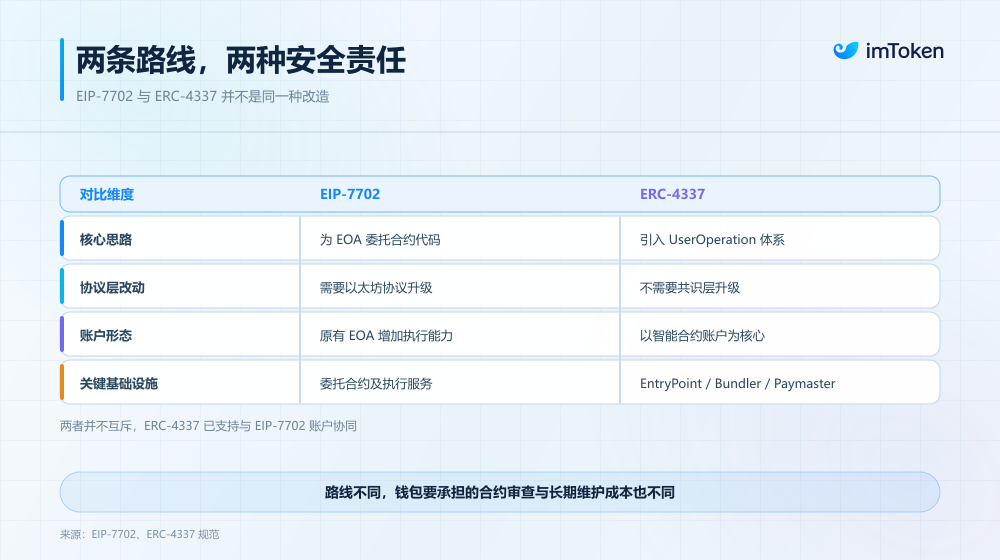
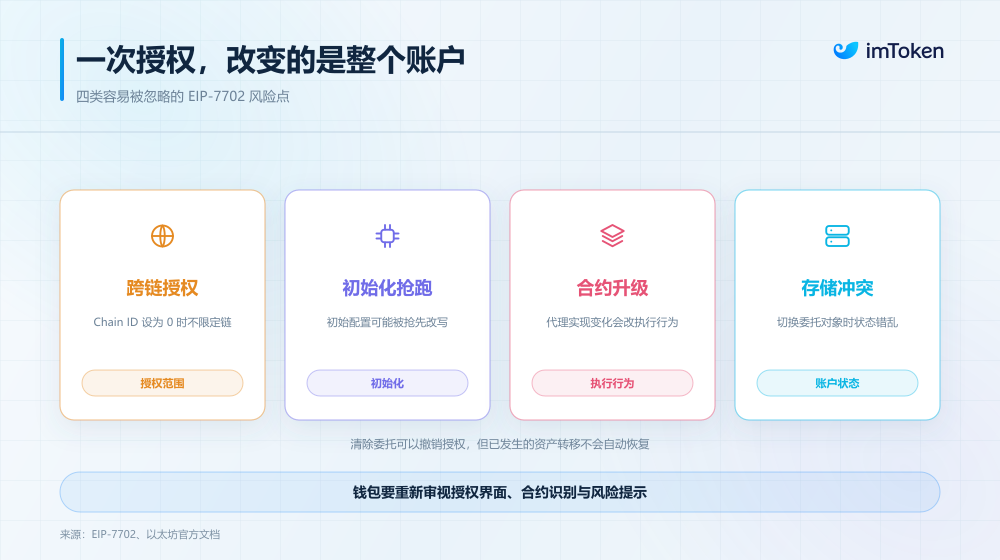
EIP-7702, which imToken noted was already on Ethereum mainnet, lets an externally owned account authorize delegation to deployed contract code. That can enable features such as batching and sponsored gas payments. It also makes the delegated code a critical trust dependency: if the user delegates to malicious or seriously flawed code, its ability to act in the account’s context could put more than one token allowance at risk.
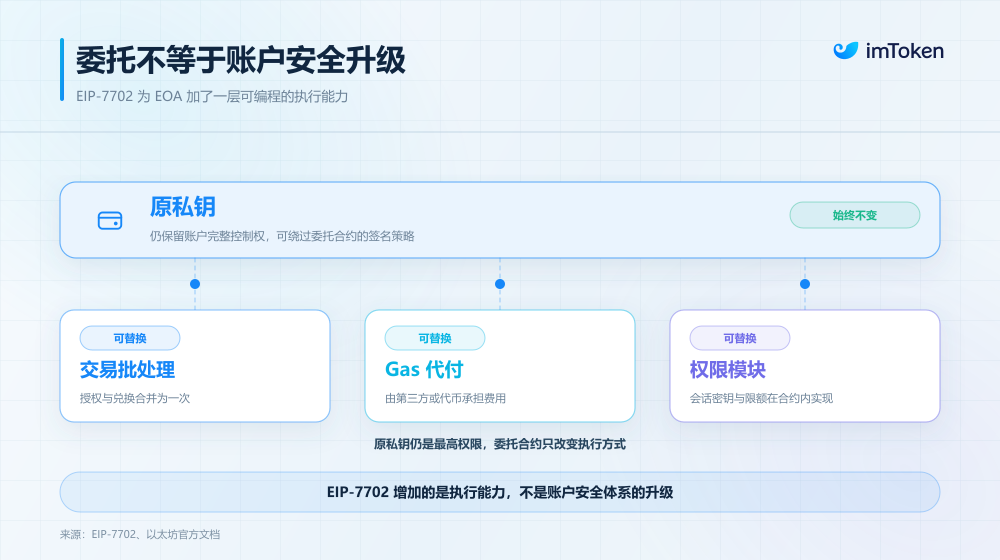
The original private key still controls the account; delegation does not automatically enforce a contract’s stricter signing policy against that key. A user can remove delegation by authorizing an empty address, but doing so cannot reverse transfers or other on-chain changes that have already occurred. imToken said clearer authorization displays, contract identification and risk warnings are among the safeguards it wants considered before wider deployment.
ERC-4337: more components to maintain
ERC-4337 takes a different route through smart accounts and supporting infrastructure. As imToken described the typical path, a wallet signs a UserOperation; a Bundler checks it through EntryPoint simulation, then submits it to the on-chain EntryPoint for validation and execution. A Paymaster may participate in fee payment, while a Factory may deploy and initialize a new account.
Those handoffs give developers flexibility, but they also leave the wallet dependent on account code, validation rules and the reliability of surrounding components. imToken said its decision to stop new ERC-4337 product investment does not dismiss the approach’s existing use or technical value. Its stated concern is the long-term cost of maintaining that infrastructure and potentially adapting accounts to future protocol changes. EIP-7702 and ERC-4337 are not mutually exclusive; imToken discussed them separately to explain their different typical implementations and risks.
Native account abstraction remains a direction, not a finished replacement
ImToken pointed to the Ethereum Foundation’s February 2026 inclusion of native account abstraction among its user-experience priorities. It also cited EIP-8141, or Frame Transactions, as a possible protocol-level route for separating validation, fee-payment authorization and execution. EIP-8141 was still a draft at the time of the article; imToken did not present it as deployed or ready for broad use.
Moving account capabilities closer to the protocol could reduce reliance on some external infrastructure, but it would not eliminate the need to audit account validation code or test new fee and transaction mechanisms. For imToken, the immediate choice was therefore about where to direct future research—not a claim that native account abstraction had already solved wallet security.