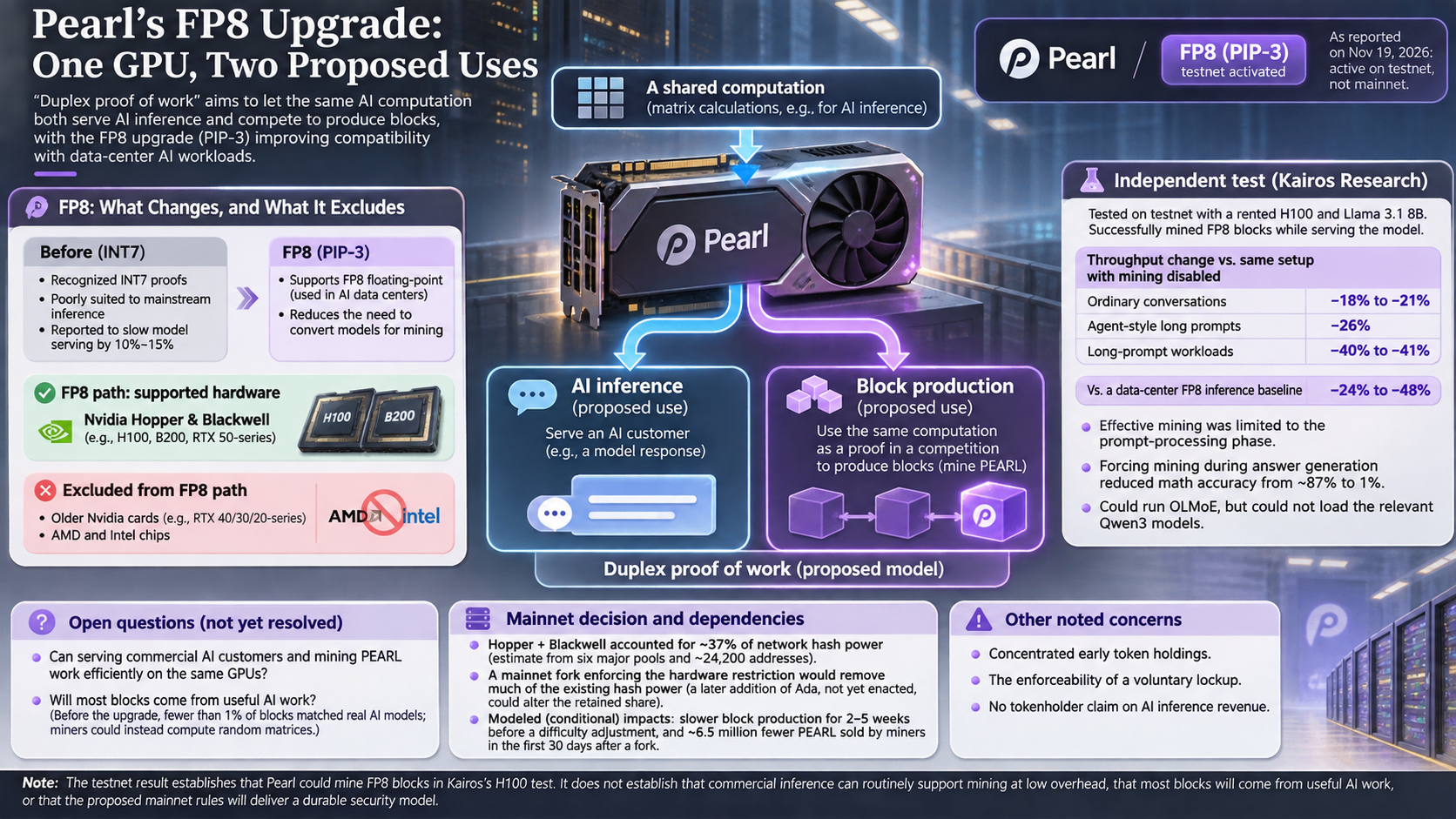
As reported on November 19, 2026, Pearl’s proposed FP8 mining upgrade had activated on testnet, not mainnet. The change aims to make the proof-of-work network more compatible with AI inference in data centers. Whether serving AI customers and mining PEARL can work efficiently on the same GPUs remained an open question.
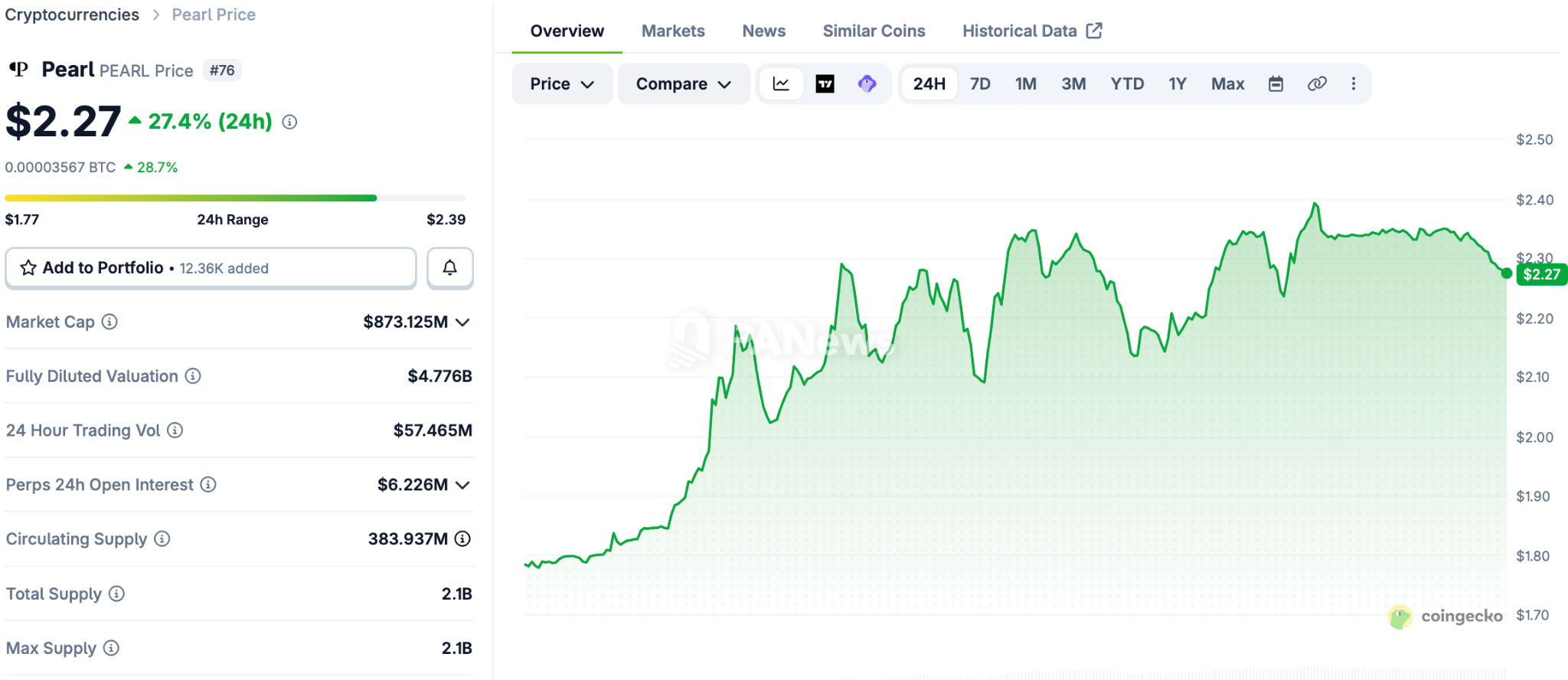
Pearl’s proposed model, called “duplex proof of work,” uses matrix calculations associated with AI inference as evidence in a competition to produce blocks. In principle, a provider could earn inference fees while also mining PEARL. That is a proposed business model, not evidence that commercial AI work was securing most of the network. Citing Blockworks, the original report said fewer than 1% of blocks before the upgrade matched real AI models; miners could instead compute random matrices.
What FP8 changes—and what it excludes
The previous protocol recognized INT7 computation proofs, a format the report said was poorly suited to mainstream inference services. The FP8 upgrade, identified as PIP-3, is intended to support a floating-point format used by AI data centers and reduce the need to convert models for mining. Pearl’s earlier INT7 approach reportedly slowed model serving by 10%–15%.
That compatibility change narrows hardware eligibility. According to the report, Pearl limited supported hardware for the FP8 path to Nvidia’s Hopper and Blackwell generations, including H100 and B200 chips and RTX 50-series cards, because differences in FP8 rounding across chips complicate agreement on exact results. The report said older Nvidia cards and AMD and Intel chips would be excluded. This is a consensus and hardware-dependency trade-off, not simply a performance upgrade.
An independent test found substantial overhead
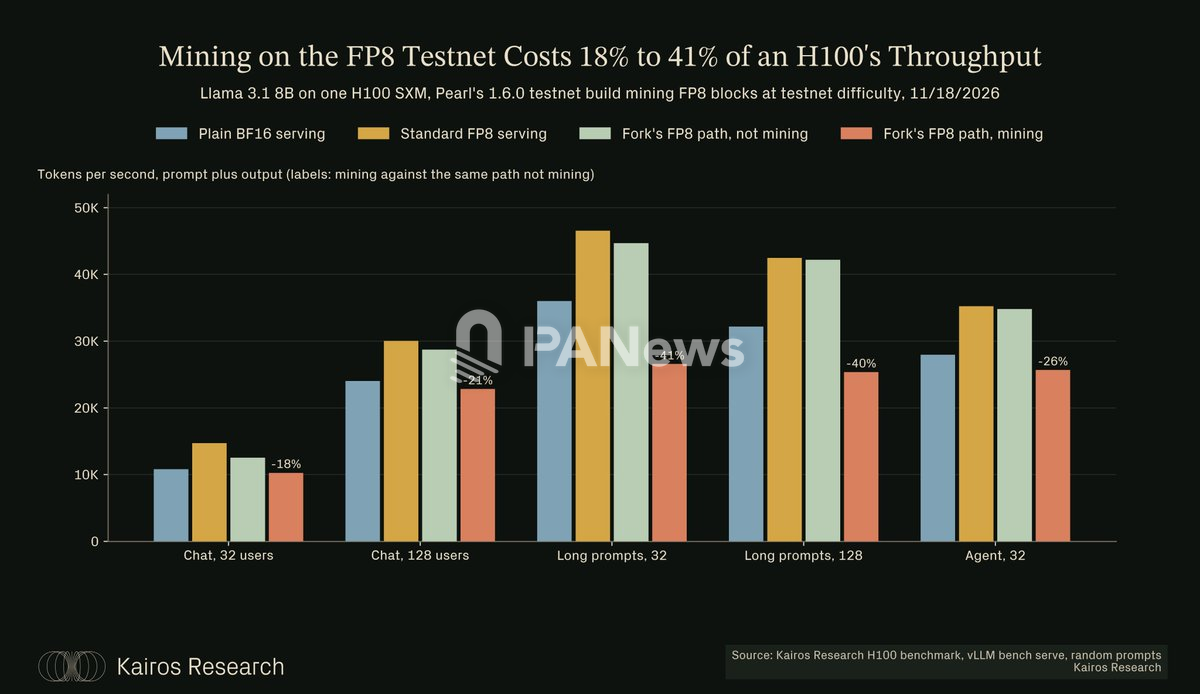
Kairos Research, which disclosed that it held PEARL, tested the FP8 testnet using a rented H100 and the Llama 3.1 8B model. It reported successfully mining FP8 blocks while serving the model. Against the same setup with mining disabled, throughput fell 18%–21% for ordinary conversations, 26% for agent-style long prompts and 40%–41% for long-prompt workloads. Against a data-center FP8 inference baseline, the reported reduction was 24%–48%. Those results were worse than the 1%–5% performance loss Pearl had projected.
Kairos also found that effective mining was limited to the prompt-processing phase. In its mathematics evaluation, forcing mining during answer generation reduced accuracy from about 87% to 1%. Its tests could run OLMoE but could not load the relevant Qwen3 models. These are findings from the tested configuration, not a measure of every possible deployment.
The mainnet decision and its dependencies
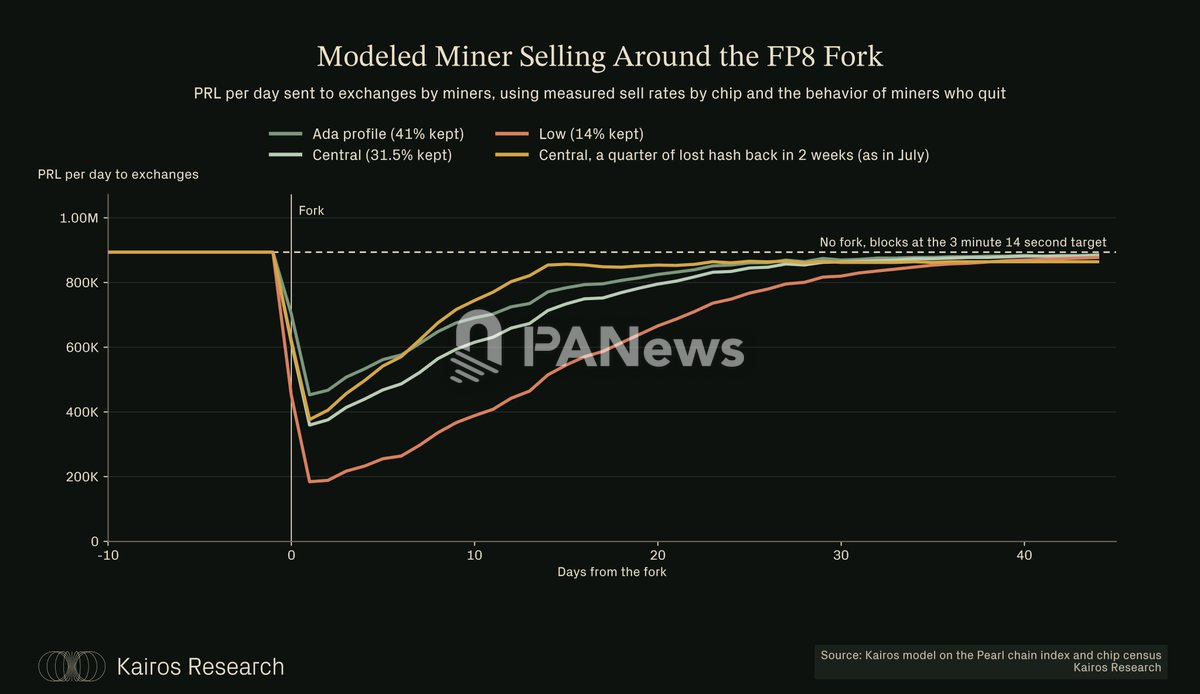
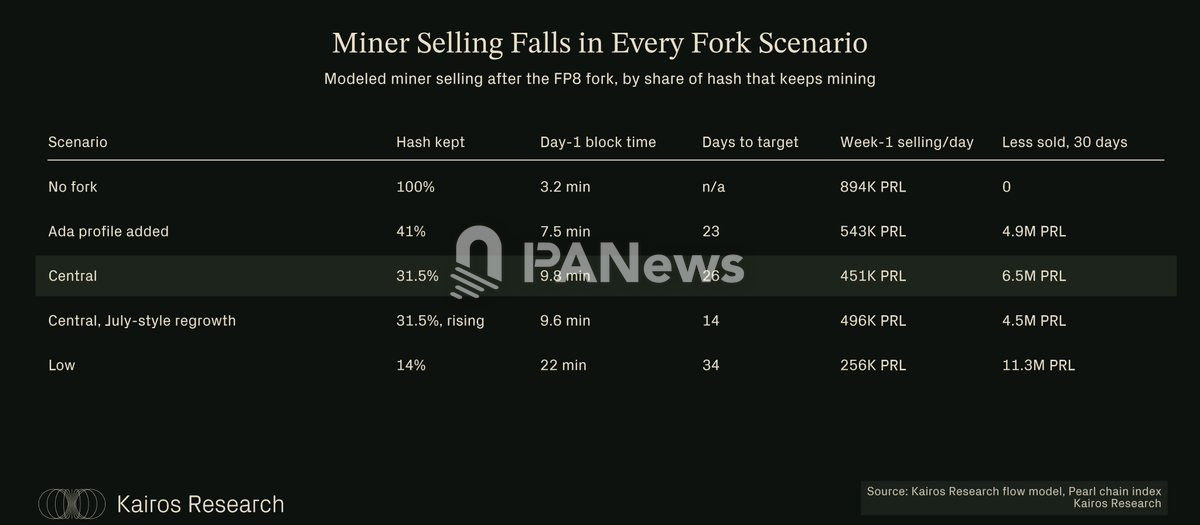
Kairos estimated from six major mining pools and roughly 24,200 addresses that Hopper and Blackwell hardware accounted for about 37% of network hash power at the time. It projected that a mainnet fork enforcing the hardware restriction would remove much of the existing hash power. A possible later addition of Ada hardware, which had not been enacted, could alter the retained share.
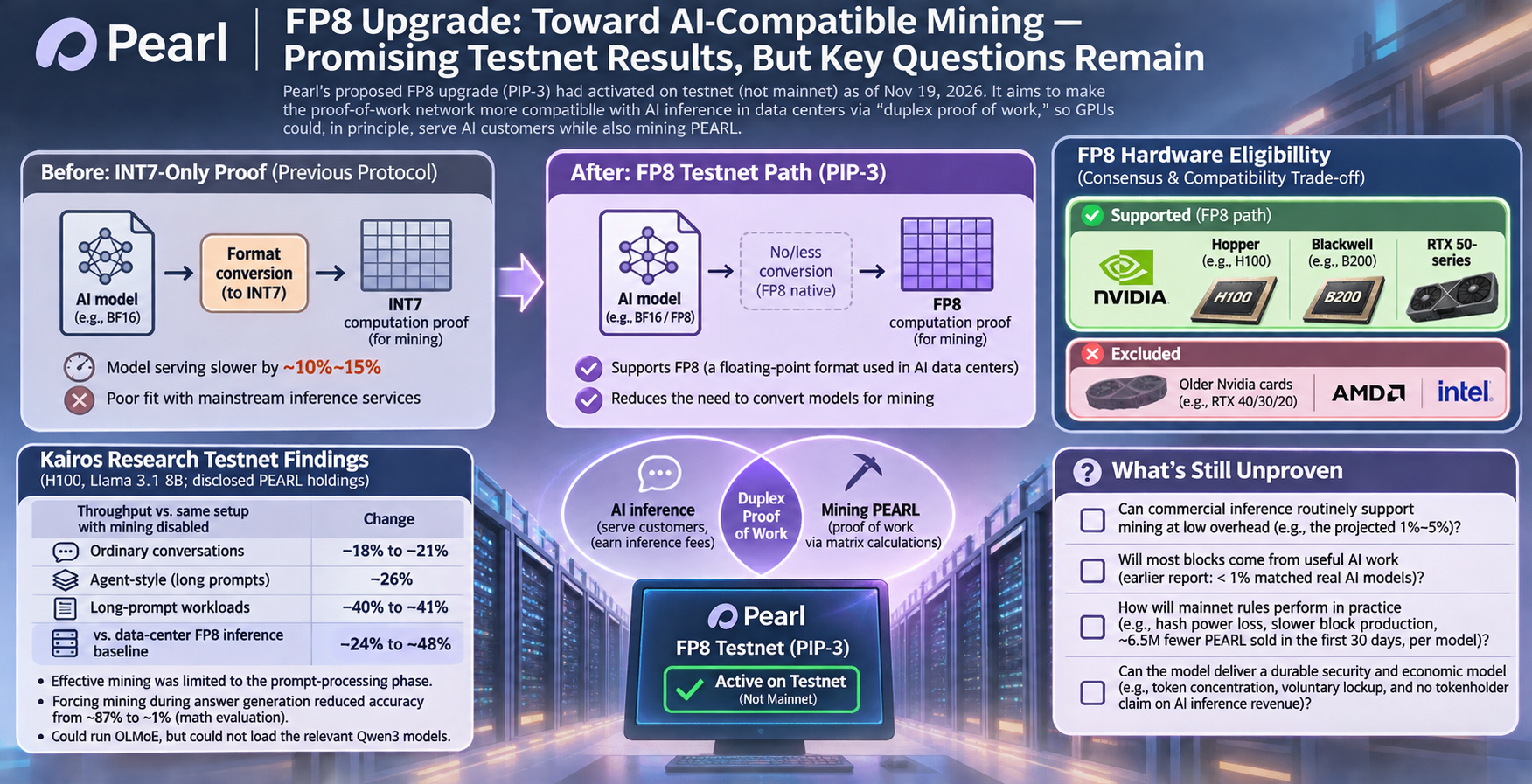
Kairos’s model also projected slower block production for two to five weeks before a difficulty adjustment and approximately 6.5 million fewer PEARL sold by miners in the first 30 days after a fork. Those are conditional forecasts, not observed mainnet outcomes. The report noted separate concerns about concentrated early token holdings, the enforceability of a voluntary lockup and the absence of a tokenholder claim on AI inference revenue.
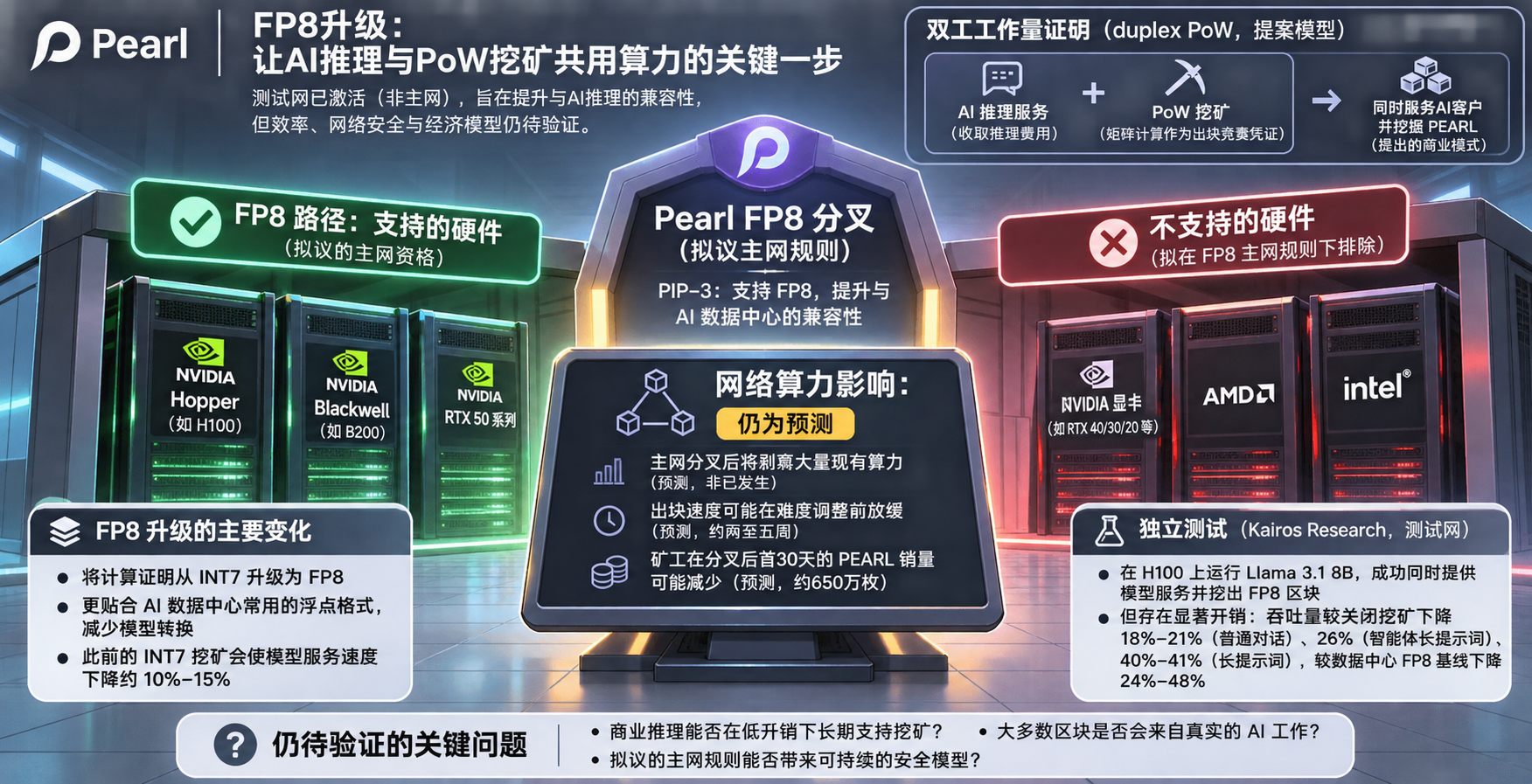
The testnet result establishes that Pearl could mine FP8 blocks in Kairos’s H100 test. It does not establish that commercial inference can routinely support mining at low overhead, that most blocks will come from useful AI work, or that the proposed mainnet rules will deliver a durable security model.